Open kitchen and living room layouts are shaping how modern homes feel and function. They create a shared space where cooking, relaxing, and socializing all happen together. This design works especially well for smaller homes, where every square foot matters. But making it work can feel tricky. You want openness without chaos. You want style without overspending. This guide walks you through practical ideas that balance flow, comfort, and budget-friendly solutions so your space feels connected and easy to live in.
10 Open Kitchen and Living Room Ideas
The following are the Open Kitchen and Living Room Ideas:
1. Use a Kitchen Island as a Functional Divider
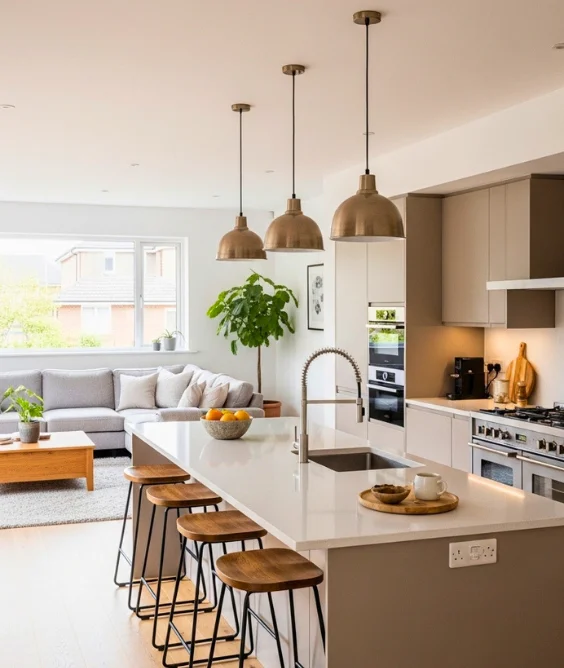
A kitchen island can create a clear boundary between your cooking and living areas without blocking the open feel. It works as a central anchor that visually separates the two zones while keeping them connected. Even in smaller homes, a compact island or narrow console table can do the job well. Choose a simple design that matches your overall style so the space feels unified rather than divided.
You can make the island more useful by adding seating. A couple of stools instantly turn it into a casual dining or social spot. This is helpful when guests are over or when family members want to sit nearby while meals are being prepared. Keep the surface neat with just a few items like a tray or bowl to avoid a cluttered look.
If a built-in island is not possible, try a DIY version using an old table or storage unit. Paint it in a neutral shade and add wheels for flexibility. This gives you the same zoning effect at a much lower cost while allowing you to move it around when needed.
2. Define Areas with Rugs for Clear Zoning
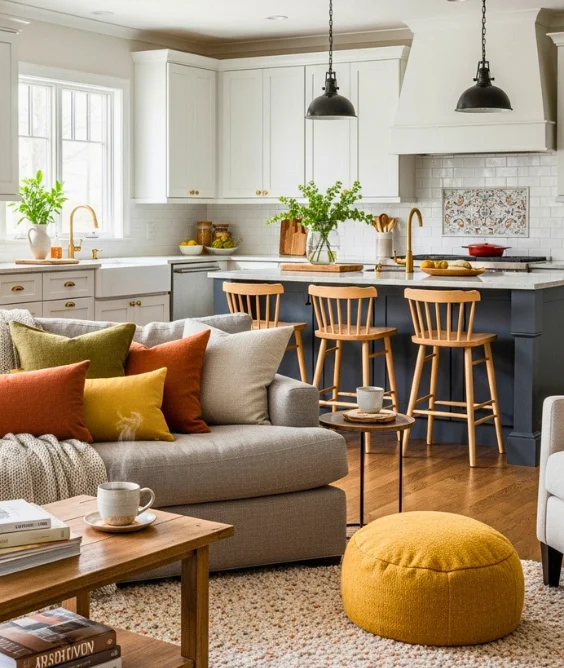
Rugs are one of the simplest ways to separate spaces in an open layout. Placing a rug under your sofa instantly defines the living area and gives it a grounded feel. It helps the eye understand where one zone ends and another begins without adding walls or barriers.
Choosing the right size is key. A larger rug that fits under most of your furniture will make the space feel connected and intentional. Smaller rugs can look out of place and break the flow. Stick to neutral tones or soft patterns so the design does not feel overwhelming or busy.
For a budget-friendly option, look for flat-weave rugs or second-hand finds. You can also layer rugs for added texture. This not only improves the look but also helps reduce noise, which is often a concern in open kitchen and living room designs.
3. Maintain a Consistent Color Palette
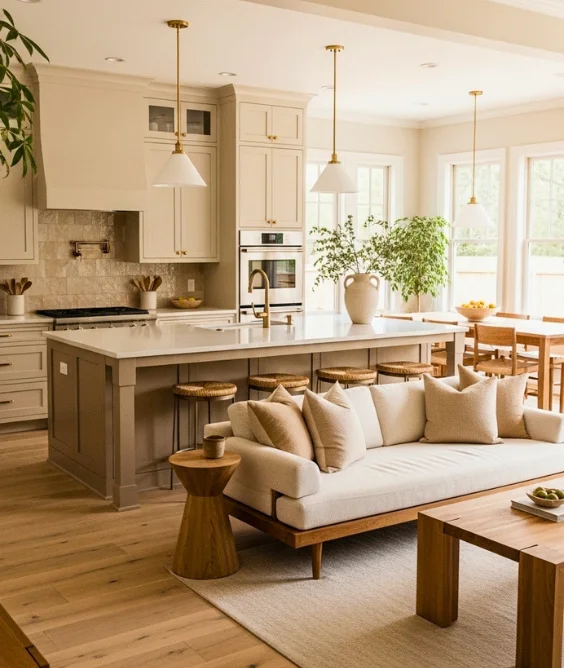
Using the same color palette across your kitchen and living room creates a smooth and connected look. When colors flow naturally from one area to another, the entire space feels larger and more organized. Neutral shades like beige, cream, and soft gray work well for this type of layout.
You can repeat colors through different elements like cabinets, cushions, rugs, and wall decor. This creates a sense of harmony without making the space look repetitive. Adding wood tones brings warmth and keeps the design from feeling too plain or cold.
If you want a bit of contrast, add it in small touches like throw pillows or a single chair. Keep the overall palette simple so the space stays calm and easy to manage. This approach works well for both small and large homes.
4. Use Lighting to Separate Zones
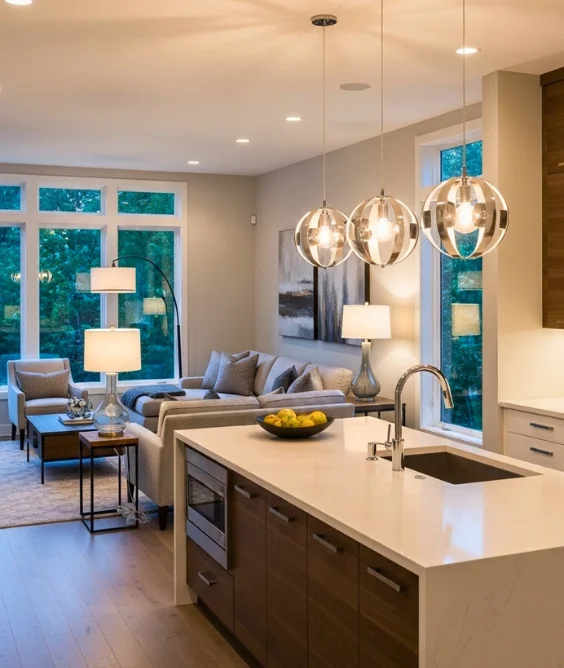
Lighting can quietly define different areas in an open space. Pendant lights above the kitchen island or dining area create a clear visual marker for the cooking zone. This makes the layout feel structured without adding physical barriers.
In the living room, use softer lighting like floor lamps or table lamps. This creates a cozy atmosphere that contrasts with the brighter kitchen area. The difference in lighting styles helps each space feel distinct while still being part of the same room.
Affordable lighting options are easy to find, and even small changes can have a big impact. Try swapping outdated fixtures or adding a new lamp to refresh the look. Thoughtful lighting placement makes your space more functional and comfortable.
5. Keep the Space Clutter-Free with Smart Storage
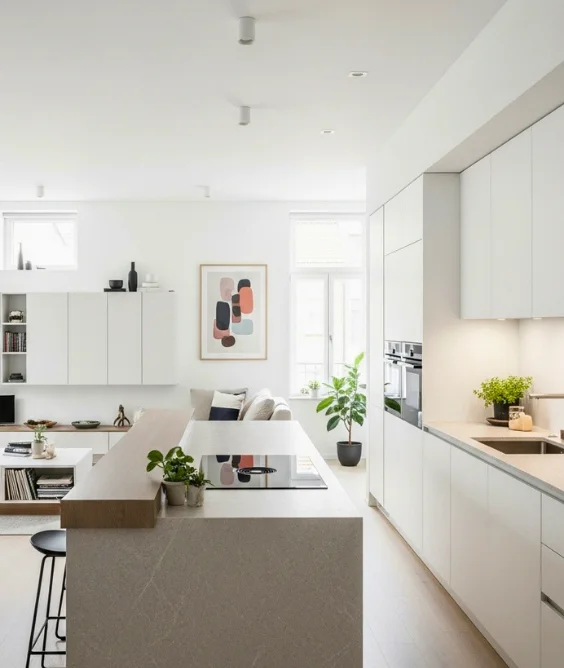
Open layouts can quickly feel messy if everything is visible. Keeping clutter under control is key to maintaining a calm and inviting space. Use closed cabinets in the kitchen to hide everyday items and keep surfaces clear.
In the living area, add storage baskets, shelves, or cabinets that blend with your decor. This allows you to store items without making the room feel crowded. Choose pieces that serve both style and function for the best results.
Simple DIY storage ideas can also help. Repurpose boxes, use decorative bins, or add hooks for extra organization. Keeping only essential items on display makes your space easier to manage and more enjoyable to spend time in.
6. Create Flow with Continuous Flooring
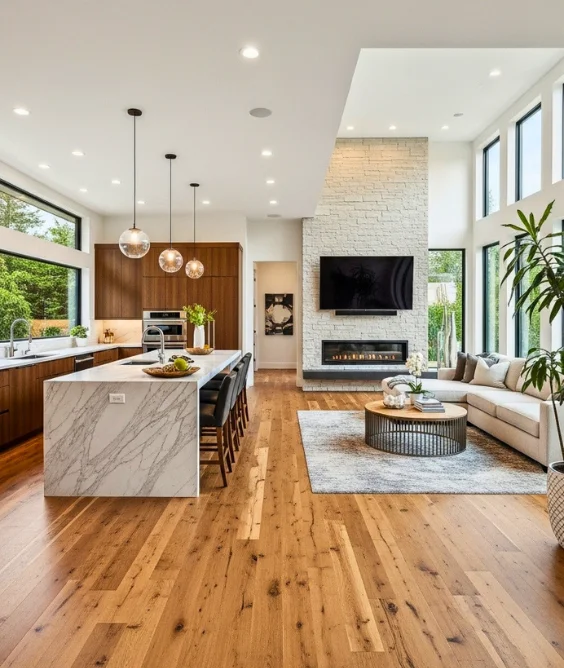
Using the same flooring throughout your kitchen and living room helps everything feel connected. It removes visual breaks and makes the space appear larger. Wood or wood-look tiles are popular because they add warmth while keeping the look simple and clean.
If you already have different flooring, you can still improve the flow. Try using rugs in similar tones to soften the transition between areas. This helps reduce contrast and keeps the design from feeling disconnected. Keeping colors consistent also plays a big role here.
For a budget-friendly option, consider peel-and-stick flooring or refinishing what you already have. Even small updates can make a noticeable difference. A continuous surface underfoot makes movement between spaces feel natural and easy.
7. Add a Feature Wall for Visual Separation
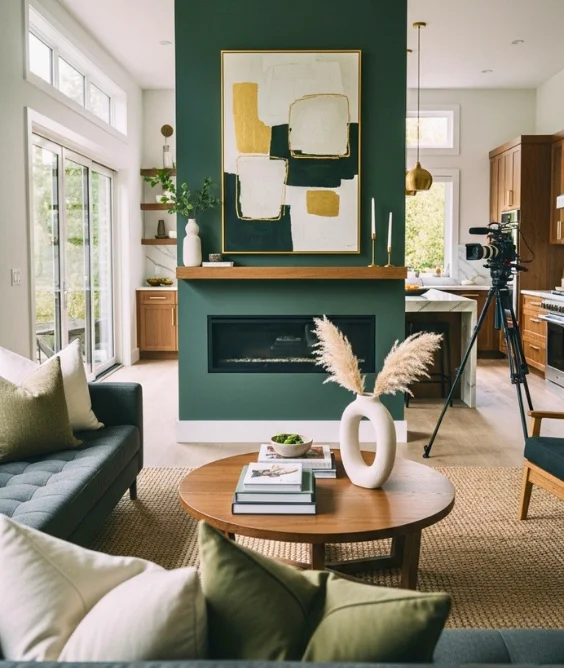
A feature wall is a simple way to define your living area without adding barriers. By painting one wall a slightly darker or contrasting color, you create a focal point that separates the space visually. This works especially well behind a sofa or TV unit.
You can also use wallpaper or textured panels if you want more depth. Peel-and-stick options are great for renters or anyone looking for a quick update. They are easy to apply and remove without damage.
Keep the rest of the space neutral so the feature wall stands out without overwhelming the room. This balance helps maintain a clean and organized look while still adding personality to your open layout.
8. Use Open Shelving as a Soft Divider
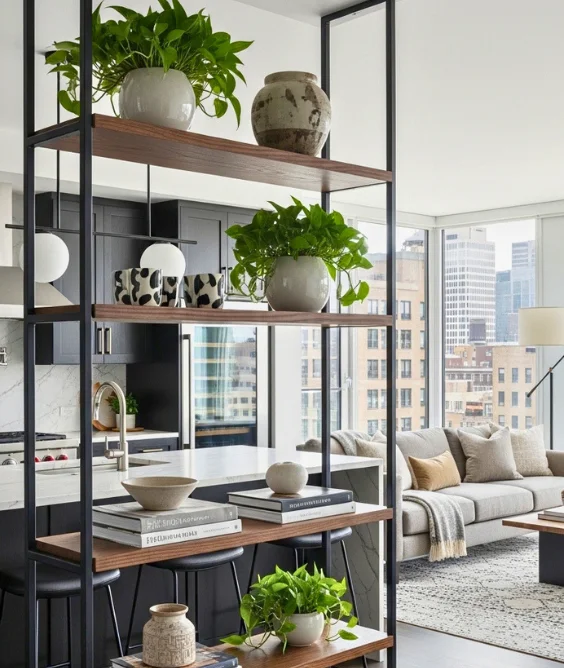
Open shelving can act as a divider while still keeping the space airy. It creates a partial boundary between the kitchen and living room without blocking light or views. This makes it a great option for smaller homes.
Use the shelves to display simple decor like plants, books, or storage baskets. Avoid overcrowding them, as too many items can make the space feel busy. A clean and minimal approach works best.
If you’re on a budget, repurpose an old bookshelf or build a simple unit yourself. Paint it to match your color scheme for a cohesive look. This idea combines storage and zoning in a practical and affordable way.
9. Incorporate Warm Wood Accents
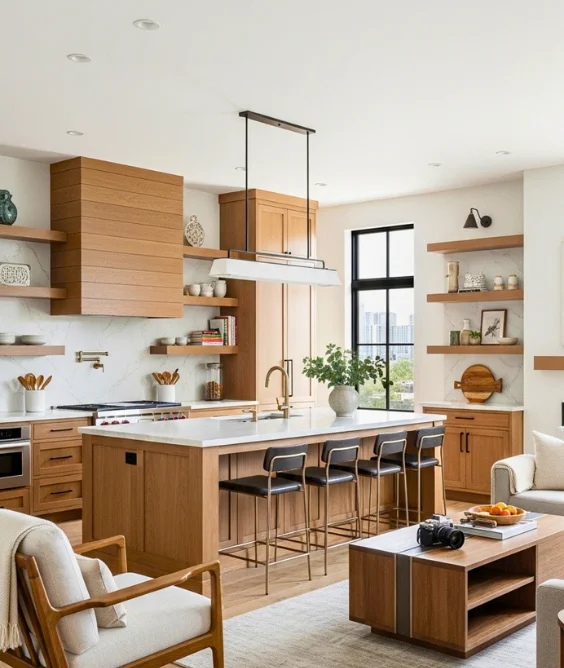
Wood accents can tie your kitchen and living room together beautifully. They add warmth and make the space feel more inviting. You can use wood in cabinets, coffee tables, shelves, or even small decor pieces.
Stick to one tone of wood for a more unified look. Mixing too many shades can feel unbalanced. Light or medium tones work well in open layouts because they keep the space feeling bright.
If real wood is expensive, there are many affordable alternatives like laminate or veneer. These options still give you the same visual effect. Adding wood elements is a simple way to make your space feel comfortable and connected.
10. Hide Mess with Smart Storage Solutions
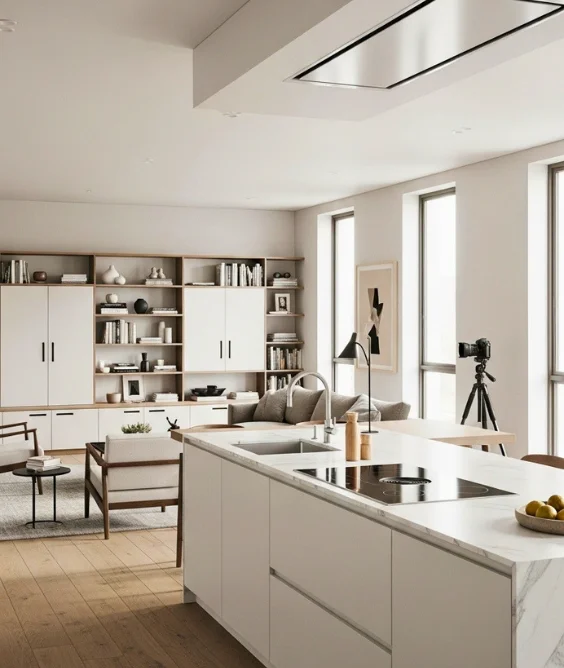
Keeping clutter out of sight is key in an open layout. Since everything is visible, even small messes can affect the overall look. Closed cabinets in the kitchen help keep countertops clean and organized.
In the living area, use storage ottomans, baskets, or cabinets to hide everyday items. Choose pieces that match your decor so they blend in naturally. This keeps the space functional without sacrificing style.
You can also try simple DIY storage ideas like labeled boxes or repurposed containers. Keeping only essential items on display makes the space easier to manage. A tidy environment helps your home feel calm and comfortable.
Conclusion
Open kitchen and living room designs work best when each area feels defined yet connected. Simple ideas like consistent flooring, smart storage, and thoughtful decor choices can make a big difference. Start small, focus on what fits your space, and build a layout that feels easy and comfortable to live in every day.