
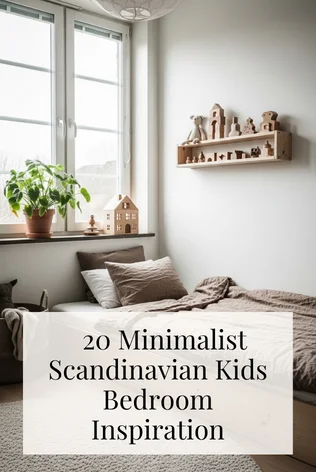
A Scandinavian kids bedroom focuses on calm, function, and simple beauty. Parents often want a space that feels peaceful but still fun for children. This style solves that by mixing neutral tones, natural materials, and playful touches. It also keeps clutter under control, which many families struggle with daily. The ideas below show how to build a room that feels warm, practical, and easy to maintain—without spending too much.
20 Minimalist Scandinavian Kids Bedroom
The following are the Minimalist Scandinavian Kids Bedroom:
1. Soft White and Light Wood Base
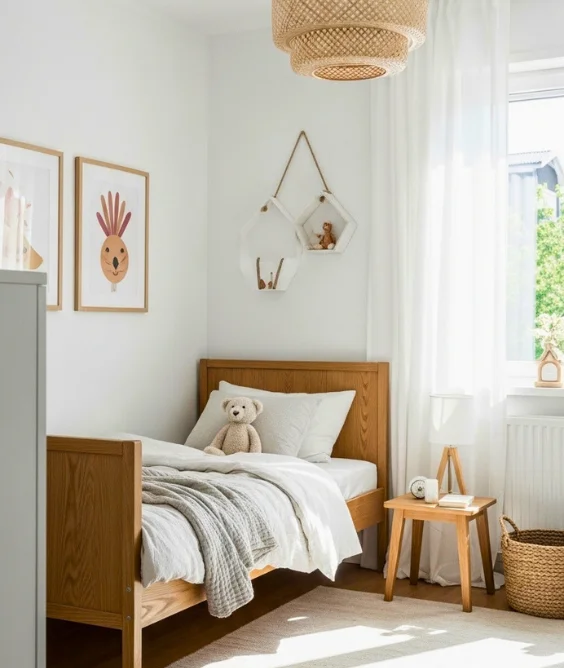
Start with a clean foundation using white walls and light wood furniture. This combination reflects light and makes even small rooms feel open and airy. Choose simple bed frames, shelves, or desks in oak, birch, or pine finishes. If buying new furniture isn’t an option, repaint older pieces in soft white and swap out dark handles for wooden ones. Keep the palette calm with beige, cream, or light gray textiles to maintain that Scandinavian look.
To keep costs low, focus on small updates. Use neutral bedding and layer it with a textured throw or cushion for warmth. Avoid filling the room with too many items. A simple rug and one or two decor pieces are enough. This setup makes future changes easy since you can switch accents without redoing the entire room. It’s a practical base that grows with your child over time.
2. Cozy Minimalism with Warm Textures
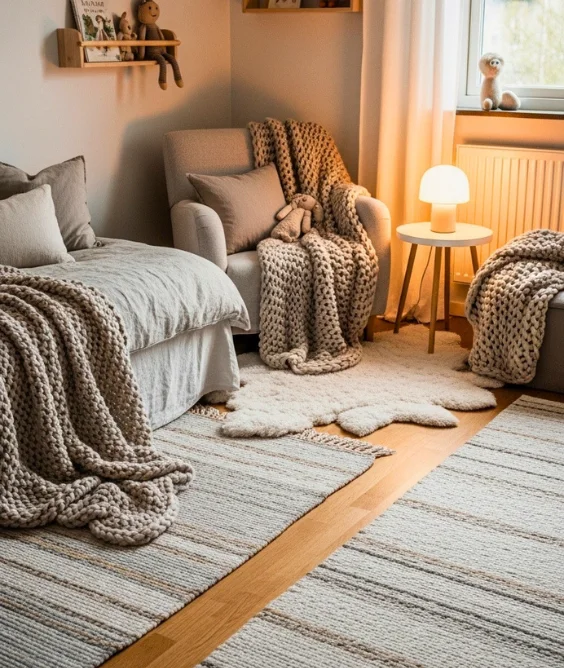
Minimal rooms can feel cold if everything is flat and plain. Add warm textures to create comfort without clutter. Use soft rugs, knit blankets, and fabric storage baskets to bring in depth. Stick to a limited mix of textures so the space stays calm. A cozy corner with a floor cushion and a soft throw can instantly make the room feel more inviting for your child.
You don’t need expensive items to achieve this. Repurpose old blankets or layer two simple rugs for a fuller look. Choose warm lighting instead of bright white bulbs to soften the space. Even a small bedside lamp can change the mood. By mixing minimal design with soft materials, you create a room that feels both simple and comfortable for everyday use.
3. Montessori Floor Bed Setup
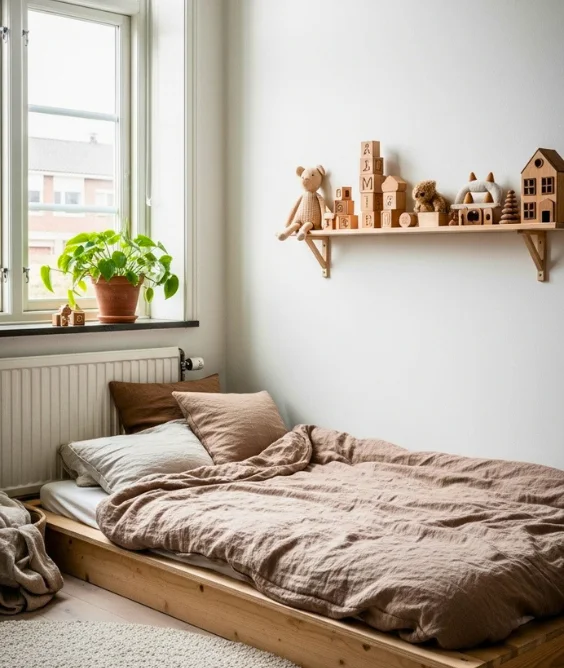
A floor bed is a simple and child-friendly choice. It allows kids to move freely and encourages independence from a young age. You can place a mattress on a low wooden base or directly on a clean floor setup. Keep the surrounding area open so your child has space to play safely. Add a small shelf nearby for books and toys within easy reach.
This setup is also budget-friendly. You can skip bulky bed frames and invest in a good-quality mattress instead. Use light bedding and avoid heavy layers to keep the look simple. A small rug beside the bed adds comfort without crowding the space. This approach blends sleep and play naturally, making the room more functional for daily routines.
4. Neutral Palette with Soft Pastel Accents
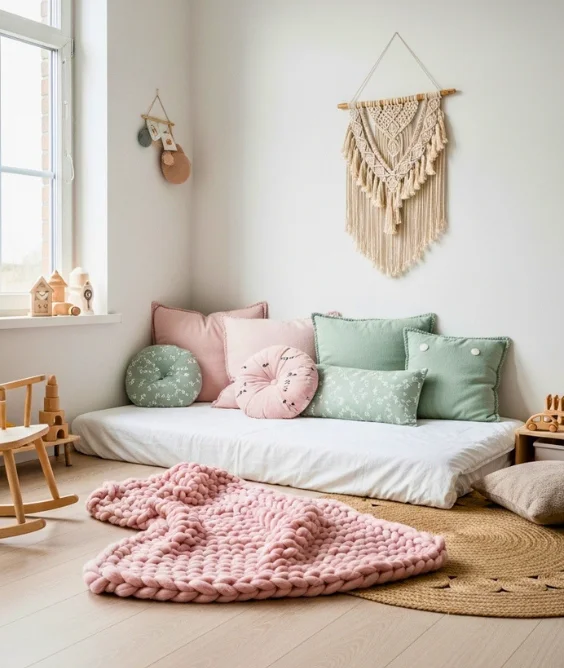
A neutral color palette keeps the room calm and timeless. Start with shades like white, beige, or soft gray for walls and larger furniture. Then bring in gentle pastel accents such as blush pink, powder blue, or sage green. Use these colors in small items like cushions, throws, or wall art so the room doesn’t feel overwhelming.
This method is easy to update as your child grows. Instead of repainting walls, simply swap out pillow covers or decor pieces. You can even create DIY artwork using soft pastel tones for a personal touch. Keeping the base neutral while adding light color accents helps maintain balance and makes the room feel playful without losing its calm look.
5. Open Shelving for Easy Storage
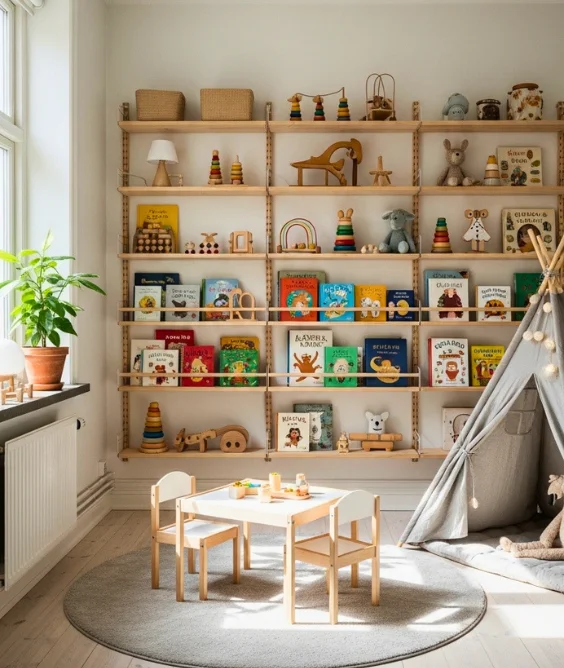
Open shelving is a simple way to keep a Scandinavian kids bedroom organized. Use wooden shelves to display a few toys, books, or decor items. Keep only what your child uses regularly on display. This reduces visual clutter and makes cleanup easier. Place shelves at a lower height so kids can access their things without help.
To stay organized, use baskets or bins for extra storage. Rotate toys every week to keep the space feeling new without adding more items. Labeling bins can also help maintain order. If you’re on a budget, install basic wall shelves or repurpose old ones with a fresh coat of paint. This setup keeps the room neat while still looking simple and stylish.
6. Multi-Functional Furniture
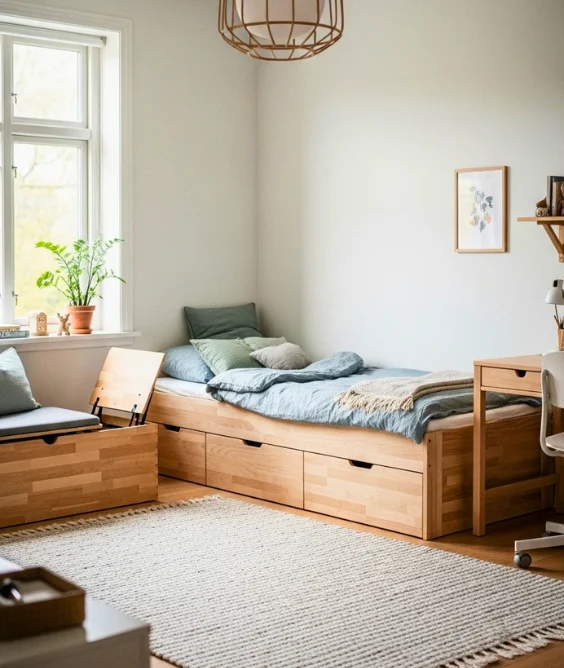
Choose furniture that serves more than one purpose. A storage bed with drawers underneath can hold clothes or toys, saving space instantly. A small desk that doubles as a play table is another smart option. Keep designs simple with clean lines and light wood tones to match the overall style. This keeps the room looking open instead of crowded.
If you’re working with a tight budget, add storage boxes under an existing bed or use a bench with baskets underneath. Look for second-hand furniture and update it with paint or new handles. This approach helps reduce clutter while keeping everything within reach. It’s practical for daily use and works especially well in smaller rooms.
7. Hygge Reading Nook
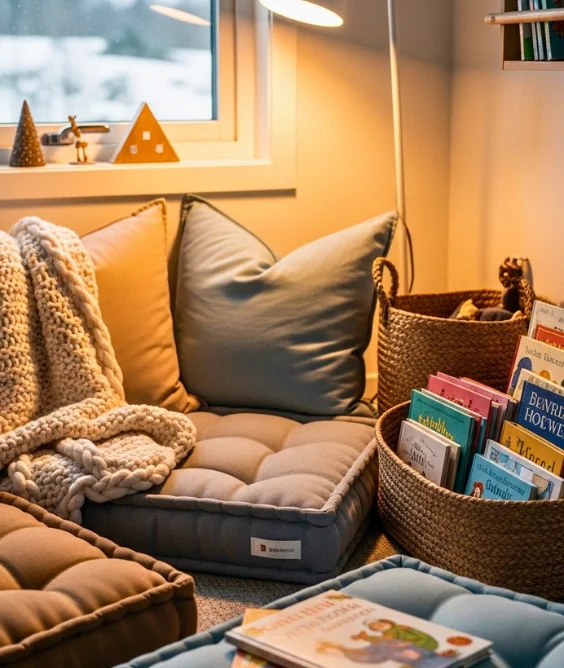
Create a quiet reading spot that feels warm and inviting. Use floor cushions, soft throws, and a small rug to define the area. Place it near a window so natural light fills the space during the day. Keep a small basket of books nearby so your child can easily pick something to read.
You don’t need much space for this idea. Even a corner works well. Add a simple lamp for evening reading and keep decor minimal. A DIY tip is to reuse old cushions or fold a blanket to create a comfy seat. This setup encourages calm activities while keeping the room organized and clutter-free.
8. Nature-Inspired Decor
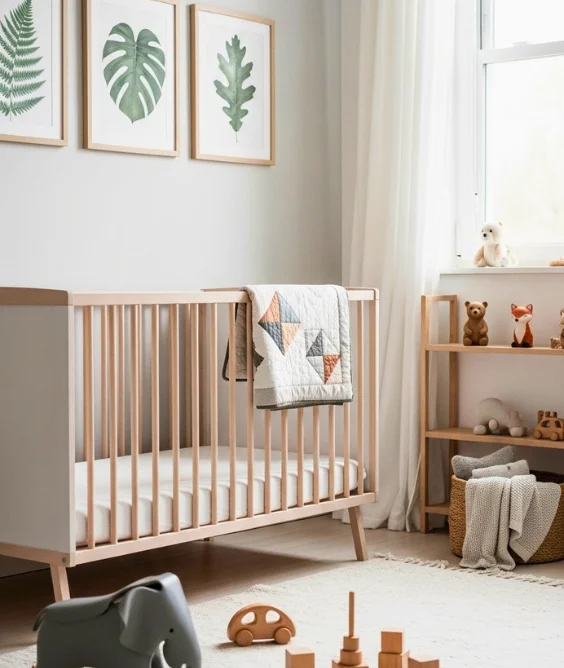
Bring in nature-inspired elements to add warmth and character. Think wooden toys, leaf prints, or simple animal shapes. These details connect the room to a calm outdoor feel without overwhelming the design. Stick to a few pieces so the space stays clean and simple.
A budget-friendly idea is to print nature artwork at home and frame it using basic frames. You can also collect small wooden items or handmade decor for a personal touch. Avoid bright plastic decorations and focus on natural textures. This keeps the room soothing and visually balanced.
9. Declutter with Toy Rotation
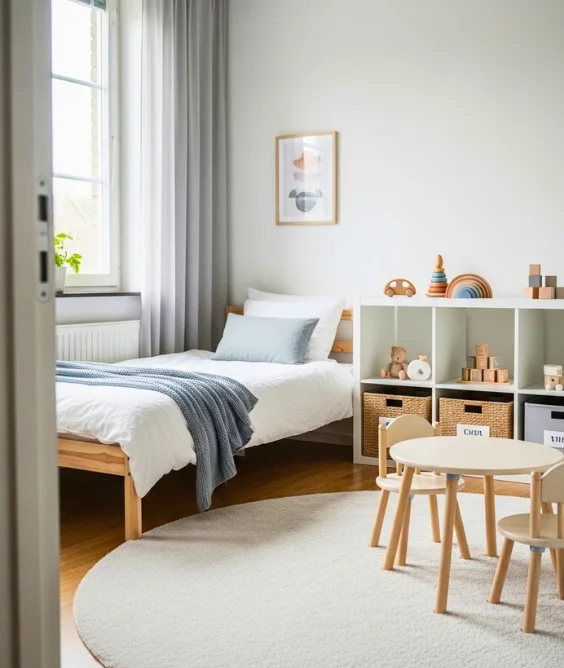
Too many toys can quickly make a room feel messy. Use a toy rotation system to keep things under control. Store some toys away and keep only a few available at a time. This makes the room easier to clean and helps your child stay focused while playing.
Use simple bins or baskets to organize items. Label them if needed for quick access. Switch toys every week to keep things interesting without adding more clutter. This method saves space and reduces stress for both parents and kids. It’s a simple habit that keeps the room looking neat every day.
10. Window-Focused Layout
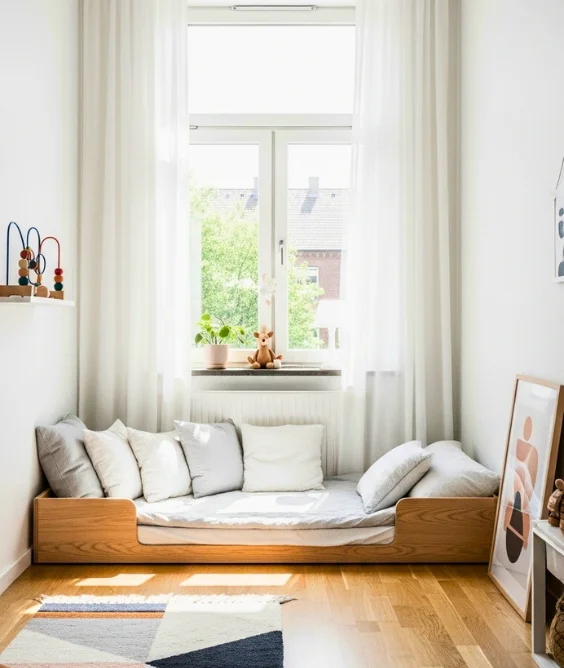
Arrange the room to make the most of natural light. Place the bed, desk, or reading area near a window. This creates a bright and calming atmosphere throughout the day. Use light curtains that let sunlight pass through instead of blocking it.
Avoid placing bulky furniture in front of windows. Keep the area open so light spreads across the room. A simple trick is to add a small seat or cushion by the window to create a relaxing spot. This layout makes the space feel larger and more peaceful without spending anything extra.
11. Simple Lighting Choices
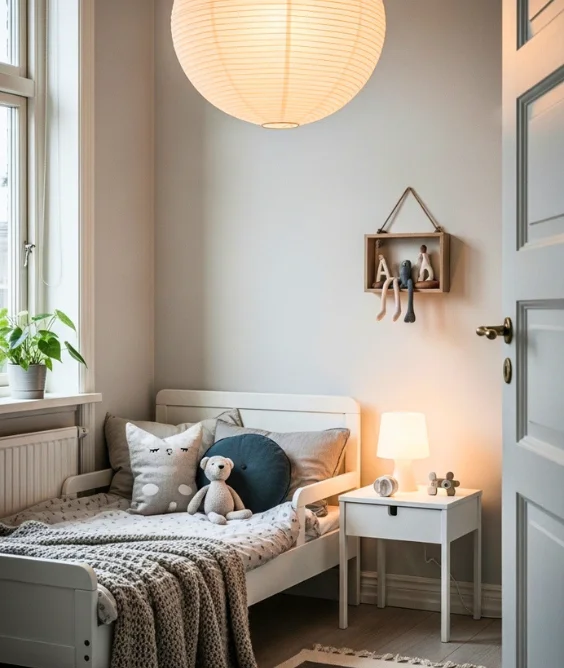
Lighting plays a big role in how the room feels. Use soft and simple lighting instead of harsh overhead lights. Paper lanterns or small lamps work well and keep the look clean. Warm light creates a calm environment, especially in the evening when kids are winding down. Keep fixtures simple and avoid anything too decorative.
You can upgrade lighting on a budget by just changing bulbs to warm tones. Add a small bedside lamp for reading or quiet time. Wall-mounted lights are also a good option if you want to save space. Keeping lighting minimal helps maintain a peaceful atmosphere while still being practical for daily use.
12. Organic and Soft Fabrics
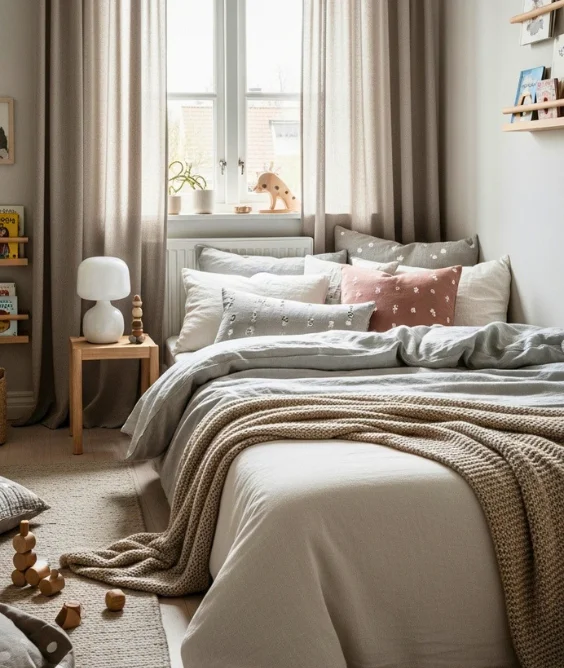
Focus on natural fabrics for comfort and durability. Cotton and linen are great choices for bedding, curtains, and cushions. They feel soft, are easy to clean, and fit perfectly with the Scandinavian style. Stick to neutral tones to keep everything looking cohesive and calm.
You don’t need to replace everything at once. Start with bedding or pillow covers and slowly build the look. Thrift stores or local markets often have affordable fabric options. Mixing a few soft textures can make the room feel warm without adding clutter. This approach keeps things simple and practical for everyday life.
13. Shared Room Zoning
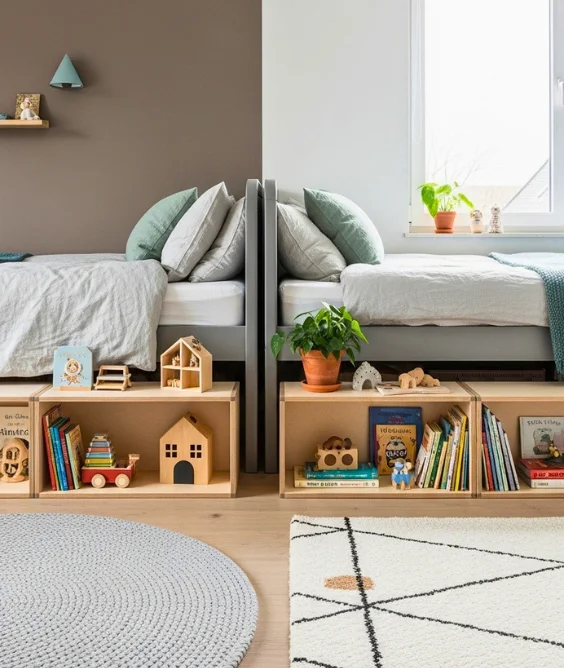
When two kids share a room, clear zones make a big difference. Use rugs, shelves, or small dividers to create separate spaces for sleep, play, and storage. Keep the overall color palette consistent so the room still feels balanced and calm.
Give each child a small personal area, like a shelf or wall space. This helps avoid conflicts and keeps things organized. You can use simple labels or color-coded bins for easy sorting. Even in a small room, zoning makes the space more functional and easier to manage daily.
14. Calm and Restful Layout
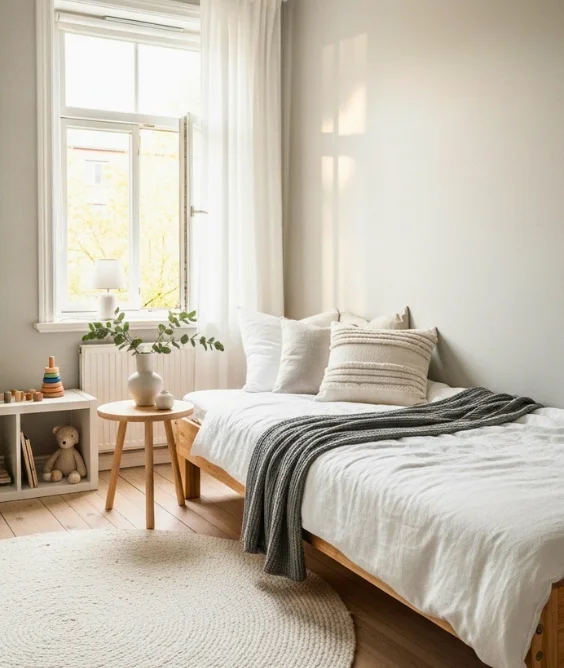
A clutter-free layout helps create a restful environment. Keep only essential furniture and leave enough open space for movement. Avoid filling every corner. This makes the room feel larger and more relaxing for both sleep and play.
Take a look at what your child actually uses and remove anything unnecessary. Rearranging furniture can also improve flow without spending money. A simple layout supports better routines and keeps the room easy to maintain. Less visual noise helps children feel more comfortable in their space.
15. IKEA-Inspired Budget Setup
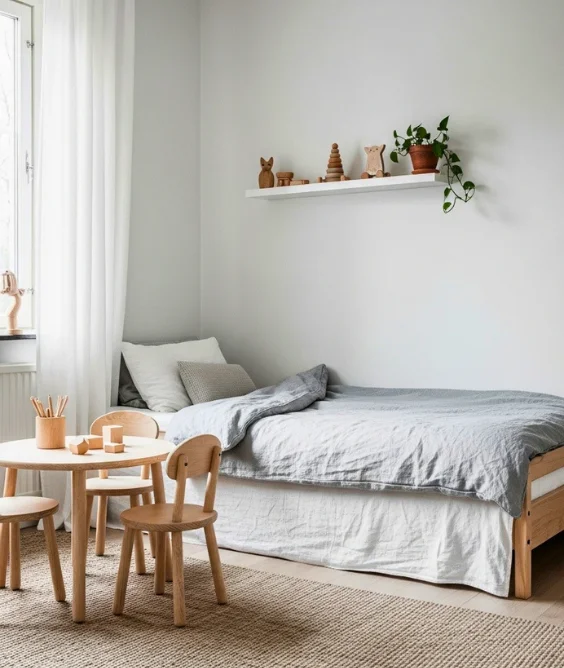
You can create a beautiful Scandinavian kids bedroom without spending a lot. Choose simple, affordable furniture with clean lines and neutral colors. Mix new items with second-hand pieces for a balanced look. Keeping things minimal helps everything feel more intentional.
A great budget trick is to update old furniture with paint or new handles. Use storage boxes, simple shelves, and basic textiles to complete the setup. Focus on function first, then add small decorative touches. This approach keeps costs low while still achieving a clean and stylish result.
16. Paper Art and Simple Wall Decor
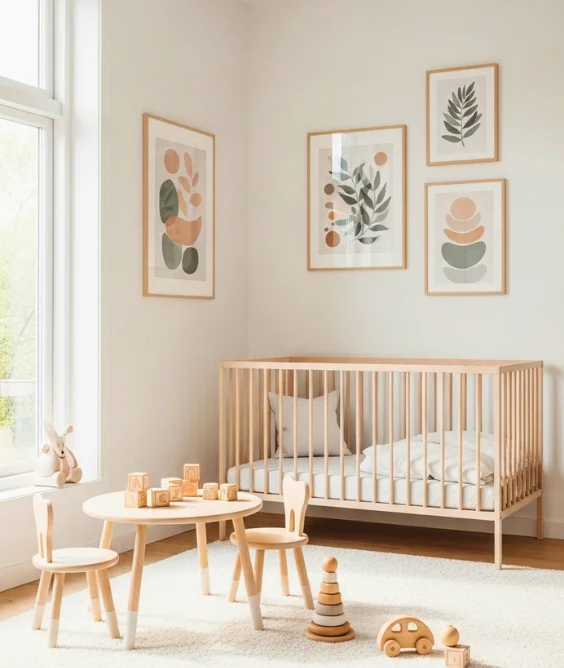
Keep wall decor simple and intentional. A few framed prints or small artworks are enough to add personality without overwhelming the space. Choose neutral or nature-inspired designs that match the overall color palette. Avoid filling every wall, as too many items can make the room feel busy and cluttered.
A budget-friendly idea is to print artwork at home and use basic frames. You can even display your child’s drawings for a personal touch. Rotate the artwork occasionally to keep things interesting. This approach keeps the room looking clean while still feeling warm and lived-in.
17. Low Furniture for Safety
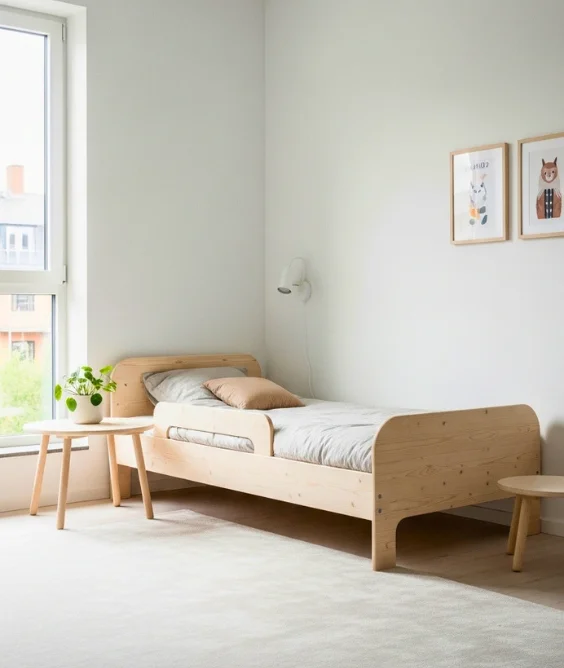
Low furniture makes the room safer and more accessible for kids. Choose beds, tables, and shelves that are closer to the ground. This reduces the risk of falls and makes it easier for children to move around independently. Keep the layout open so there are no tight or crowded areas.
Look for furniture with rounded edges or soften sharp corners using simple protectors. If you already have taller pieces, place frequently used items on lower levels. This setup supports both safety and comfort while maintaining a clean, minimalist look that fits the Scandinavian style.
18. Seasonal Accent Swaps
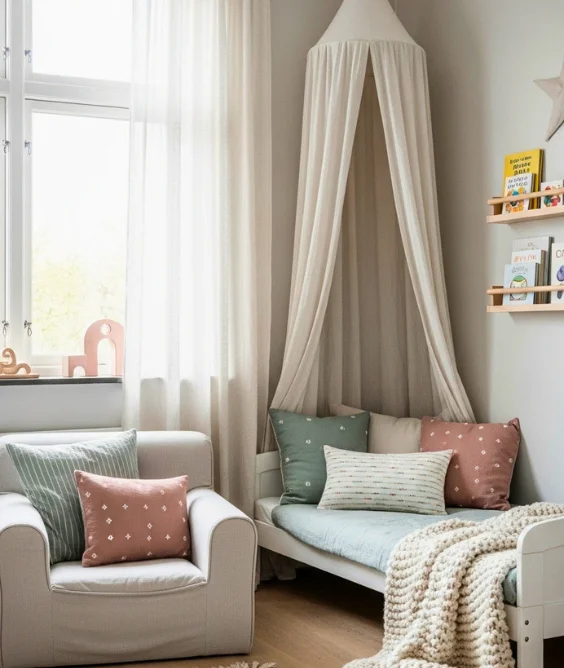
Instead of changing the whole room, update small details with the seasons. Swap out cushions, blankets, or curtains in soft colors to give the space a new feel. Keep the base neutral so these changes are quick and affordable. This method helps the room stay interesting without extra effort.
You can store off-season items in simple boxes and rotate them when needed. Even small changes like a new pillow cover can make a difference. This approach saves money and keeps the design flexible as your child’s preferences change over time.
19. Indoor-Outdoor Feel
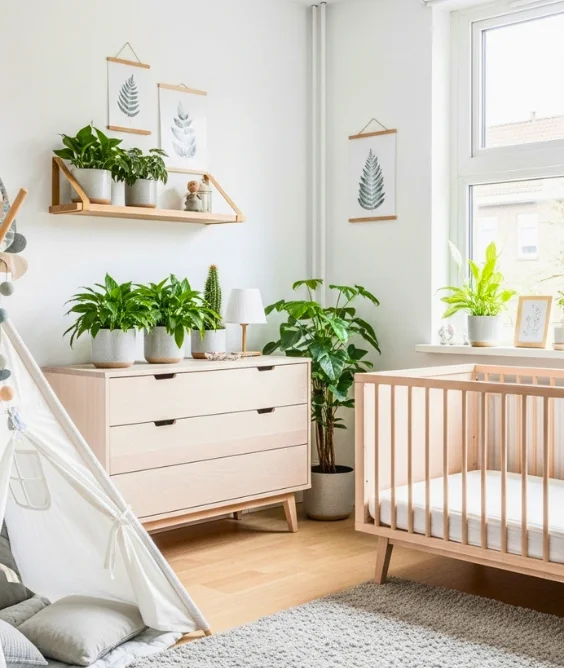
Bring a bit of nature inside to create a calm atmosphere. Add a few small plants or natural materials like wood and woven textures. Keep it simple and avoid overcrowding the space. Even one or two plants can make the room feel more lively and connected to nature.
If real plants are hard to maintain, use safe and easy options or natural-looking alternatives. Place them near windows where light is available. This small addition makes the room feel more relaxed and balanced without changing the overall design.
20. Less Clutter, More Meaning
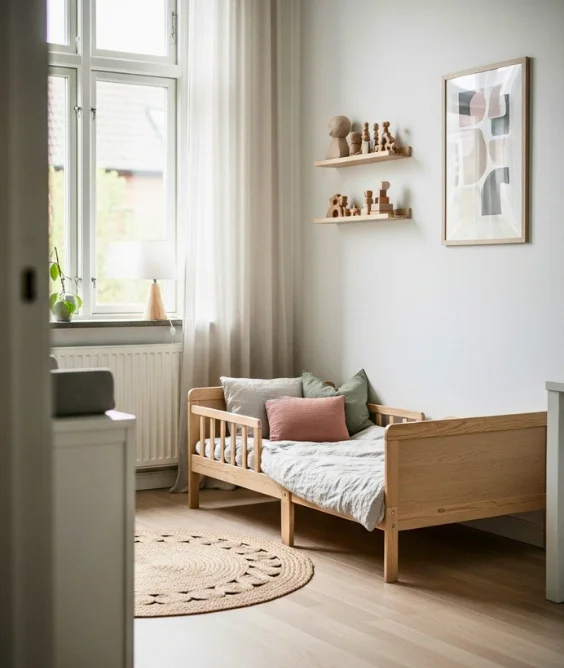
Focus on keeping only what truly matters in the room. A minimal approach helps reduce stress and makes daily cleanup easier. Keep toys, furniture, and decor that your child actually uses or enjoys. Remove anything that adds unnecessary mess or distraction.
Start small by clearing one area at a time. Use simple storage solutions to organize what remains. This habit keeps the room functional and calm over time. A space with fewer items feels more open, making it easier for your child to relax, play, and sleep comfortably.
Conclusion:
A Scandinavian kids bedroom is all about simplicity, comfort, and smart use of space. By focusing on neutral colors, natural materials, and practical storage, you can create a room that feels calm and easy to manage. Start with small changes, reuse what you have, and build gradually. With a thoughtful approach, you’ll create a space your child can enjoy every day while keeping things organized and stress-free.


