Creating a kids bedroom with a study table is no longer just about placing a desk in the corner. Parents want a space where children can sleep, learn, and play without clutter or distraction. The right setup helps kids stay focused while still enjoying their room. With smart layouts, simple DIY ideas, and budget-friendly furniture, even small rooms can include a practical study area. Below are creative and realistic ideas you can use to design a space that works for everyday life.
15 Kids Bedroom with Study Table Designs
The following are the Kids Bedroom with Study Table Designs:
1. Window-Side Study Table Setup
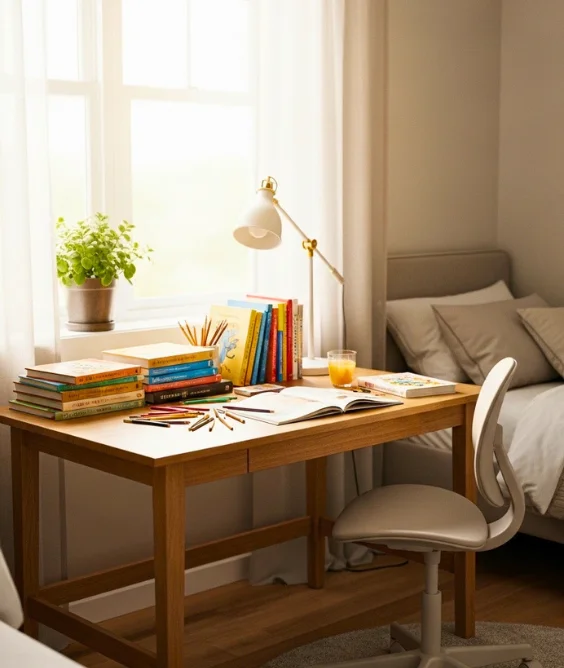
Placing a study table near a window is a simple way to improve your child’s learning space. Natural light helps reduce eye strain and keeps the area bright throughout the day. Position the desk so your child faces the window or sits sideways to avoid glare. Keep the setup clean with only a few essentials like books, pencils, and a lamp. This layout works well in both small and medium-sized rooms without making the space feel crowded.
To keep costs low, reuse an old table and place it near the window. Add a small shelf above for extra storage without taking up floor space. Use light curtains to control sunlight while still keeping the room airy. A comfortable chair with a cushion can make long study sessions easier. This idea is practical, easy to set up, and works for almost any bedroom layout.
2. Compact Corner Study Table

A corner study table is a smart way to use space that often goes unused. By placing the desk in a corner, you free up the center of the room for movement and play. L-shaped or triangular desks fit well and provide enough surface for books and supplies. Add a small chair and keep the setup simple so the area doesn’t feel tight or cluttered.
You can make a DIY version using two wooden boards fixed into the corner with brackets. Install floating shelves above the desk to store books and keep the surface clear. Wall hooks can hold bags or headphones, saving even more space. Light-colored furniture can make the room feel larger. This setup is ideal for compact bedrooms where every inch matters.
3. Foldable Wall-Mounted Desk

A foldable wall-mounted desk is perfect for rooms with limited space. It can be opened when it’s time to study and folded away after use. This keeps the room open and flexible for other activities. The design is simple but very effective, especially in shared bedrooms or small apartments. Keep the area around the desk minimal to avoid distractions.
For a budget-friendly option, create your own foldable desk using a wooden board and sturdy hinges. Mount it securely to the wall for safety. Add a small board or organizer above for notes and supplies. Use a lightweight chair that can be moved easily. This idea helps maintain a clean and organized room without sacrificing functionality.
4. Bunk Bed with Study Table Underneath

A bunk bed with a study table underneath is a great space-saving solution. The upper section is used for sleeping, while the lower section becomes a study area. This setup clearly separates rest and learning zones, which helps kids focus better. It works especially well in shared rooms or smaller homes where space is limited.
Add a desk lamp under the bed to provide enough light for studying. Use nearby drawers or storage boxes to keep books and supplies organized. You can also create a similar setup by placing a desk under a loft bed. This idea keeps everything in one compact area while still feeling comfortable and functional.
5. Study Table with Built-In Storage
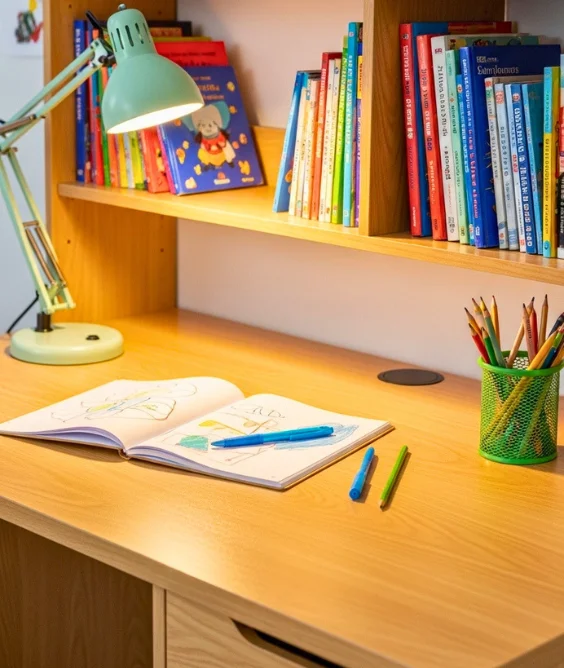
A study table with built-in storage helps keep the bedroom neat and organized. Desks with drawers or shelves allow kids to store books, stationery, and other items in one place. This reduces clutter on the desk surface and makes it easier for kids to find what they need. A tidy space can also help improve focus during study time.
If buying a new desk is not an option, you can add storage to an existing table. Use baskets, small boxes, or plastic containers under or beside the desk. Label them for easy use. Install a shelf above the desk for extra space without crowding the area. This setup is simple, practical, and helps build good organization habits from an early age.
6. Pastel-Themed Study Table
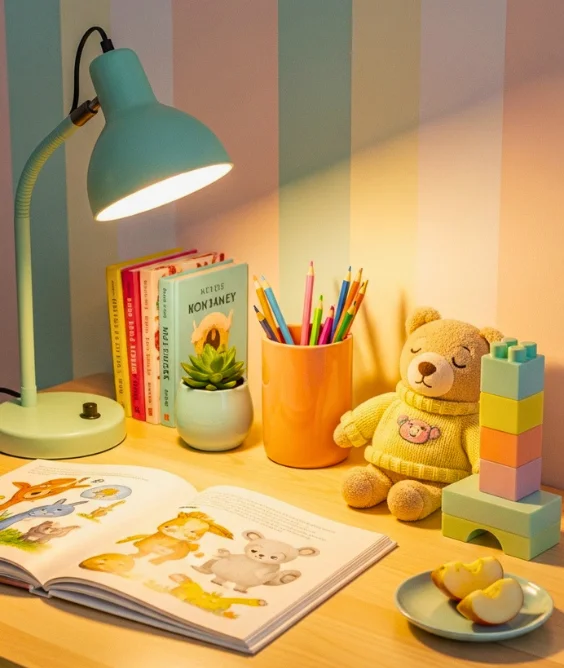
A pastel-themed study table creates a calm and relaxing environment for kids. Soft colors like mint, peach, or light blue make the space feel gentle and inviting. These tones are easy on the eyes and help reduce visual distractions. Keep the desk simple and pair it with matching accessories like a lamp or pencil holder. This setup works well for both younger kids and older children.
You can repaint an old desk using pastel shades to save money. Add a soft chair cushion in a similar color to complete the look. Keep decorations minimal so the space stays neat and focused. Small touches like matching storage boxes or wall art can bring everything together. This idea is affordable and easy to refresh over time.
7. Shared Study Table for Siblings
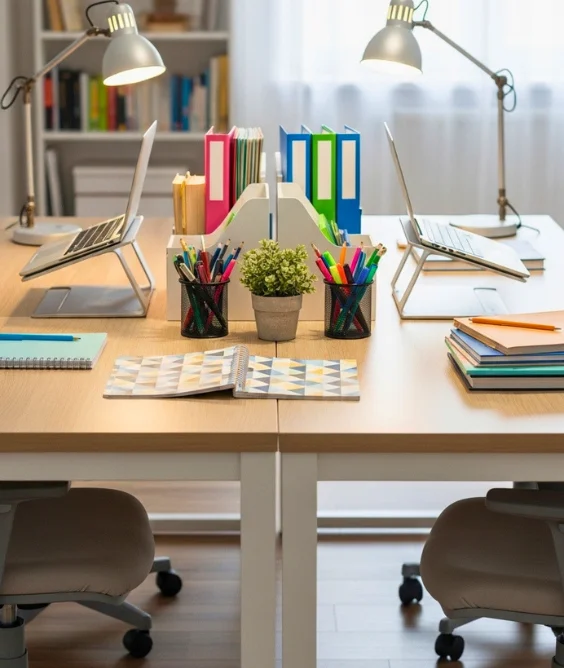
A shared study table is a practical solution for siblings sharing a bedroom. A long desk allows both children to study at the same time without needing separate furniture. Place two chairs and divide the space evenly so each child has their own area. Keeping things balanced helps avoid distractions and keeps the setup organized.
To make it more functional, use trays or small organizers to separate each child’s supplies. You can also label drawers or sections for easy use. A simple dining table can work as a budget-friendly desk. Add shelves above for extra storage without taking up floor space. This setup encourages routine and keeps everything in one place.
8. Wall Shelf Study Nook

A wall shelf study nook is perfect for creating a small learning space in any bedroom. Use a compact desk and install shelves above it to store books and supplies. This setup keeps everything close without making the room feel crowded. Adding a small rug or mat can help define the study area clearly.
For a DIY approach, use wooden planks to create shelves and mount them securely. Keep only essential items on display to avoid clutter. A small lamp can provide extra light if needed. This idea works well in tight spaces and helps create a dedicated area for studying without major changes.
9. Study Table Facing Away from Bed

The direction of the study table can affect how well kids focus. When the desk faces the bed, it can lead to distractions and reduce attention. Placing the desk facing a wall or window creates a more focused environment. This simple change can improve study habits without any extra cost.
Keep the study area separate from toys and sleeping space as much as possible. You can also use a small divider or shelf to create a visual boundary. Keep the desk clean with only necessary items. This setup helps children stay attentive and makes study time more productive.
10. Adjustable Height Study Table

An adjustable height study table is a smart choice for growing kids. It can be raised or lowered as your child gets taller, making it useful for many years. This helps maintain proper posture and keeps the study setup comfortable. Pair it with a supportive chair for better seating.
If buying an adjustable desk is not possible, you can adjust the setup using cushions or footrests. Keep books and materials at eye level to avoid strain. This idea helps create a study space that adapts over time. It is practical, long-lasting, and supports better learning habits.
11. Study Table with Pegboard Wall

A pegboard wall above the study table adds flexible and easy storage. It allows kids to hang supplies like pencils, scissors, and small baskets within reach. This keeps the desk surface clean and gives everything a proper place. The setup looks neat while still being very practical for daily use.
You can create a DIY pegboard using a simple board and hooks. Paint it to match the room for a coordinated look. Rearranging items is easy, so the setup can change as your child grows. This idea helps keep things organized without adding bulky furniture to the room.
12. Minimalist Study Table Setup
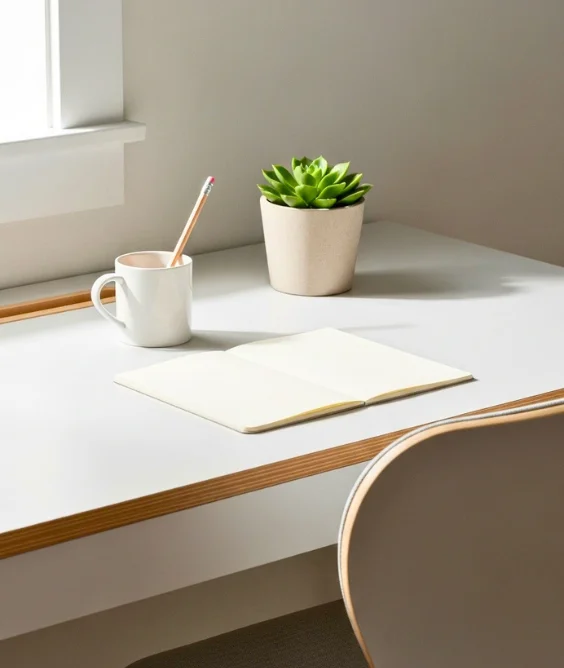
A minimalist study table setup helps reduce distractions and improves focus. Keep only essential items like books, a lamp, and basic stationery on the desk. Neutral colors such as white, beige, or light wood create a calm and tidy environment. This style works well for kids who get distracted easily.
You don’t need expensive furniture for this look. Use a simple table and remove unnecessary items. Store extra supplies in drawers or boxes nearby. Keeping the space clean makes it easier for kids to concentrate and complete their work without feeling overwhelmed.
13. Study Table with Chalkboard Wall

A chalkboard wall behind the study table adds both fun and function. Kids can use it to write notes, practice lessons, or draw freely. This keeps them engaged while learning and makes study time less boring. It also reduces the need for extra notebooks for rough work.
You can easily create this by applying chalkboard paint to a section of the wall. Keep chalk and an eraser nearby for quick use. This idea is budget-friendly and works well for younger kids who enjoy interactive learning. It adds a creative touch to the study space.
14. Floating Desk with LED Light

A floating desk is mounted directly to the wall, which saves floor space and keeps the room looking open. It is a great option for small bedrooms where every inch counts. The clean design makes the study area look simple and organized without bulky furniture.
Adding soft LED lighting under or around the desk improves visibility during evening study time. It also creates a cozy atmosphere. You can install a floating desk using wooden boards and brackets as a DIY project. This setup is modern, space-saving, and easy to maintain.
15. Study Table in Wardrobe Unit
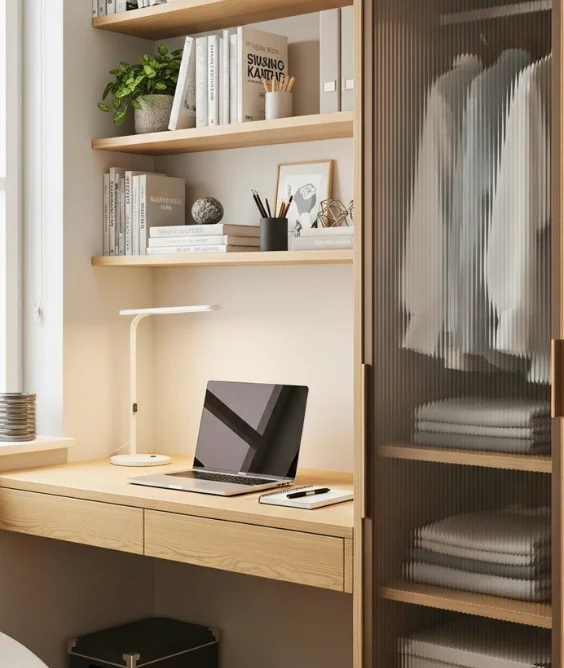
Combining a study table with a wardrobe is a smart way to save space. The desk can be built into the side or center of the wardrobe, keeping everything in one place. This setup reduces clutter and makes the room look more organized. It works especially well in compact bedrooms.
You can customize this idea by adding shelves or drawers around the desk area. Keep study materials close and store clothes in the same unit. If a custom wardrobe is not possible, place a desk next to an existing one for a similar effect. This design is practical and easy to manage daily.
Conclusion
A well-designed kids bedroom with a study table doesn’t require a big budget or a large room. Small changes like better placement, smart storage, and simple DIY desks can make a big difference. Focus on comfort, light, and organization. Start with one idea from this list and build around it. Over time, you’ll create a space where your child can learn, relax, and grow comfortably.