Designing a kids bedroom wardrobe is not just about storage. It shapes how children interact with their space every day. A smart layout keeps clothes organized, toys easy to find, and clutter under control. Many homes face limited space, so space-saving wardrobes and flexible layouts are now a popular choice. Parents also want designs that grow with their child, making modular wardrobes and adjustable features more useful than fixed setups. This guide shares practical, affordable ideas you can actually use. Each one focuses on simple upgrades, easy DIY tweaks, and layouts that work in real homes.
25 Best Kids Bedroom Wardrobe Design Ideas
The following are the Best Kids Bedroom Wardrobe Design Ideas:
1. Modular Wardrobe with Adjustable Shelves
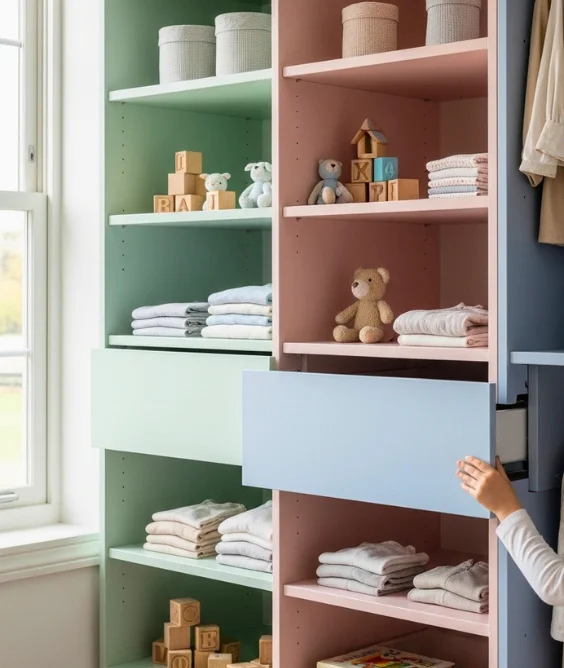
A modular wardrobe is a smart choice for growing kids. It allows you to adjust shelves, drawers, and hanging space as your child’s needs change. You can start with simple compartments for toys and small clothes. Later, convert them into sections for books, school items, or larger outfits. This flexibility helps you avoid replacing furniture often and keeps the room organized.
For a budget-friendly setup, use basic wooden panels with movable brackets. Add storage baskets for smaller items and label them for easy use. Keep lower shelves accessible so kids can manage their belongings on their own. This type of wardrobe supports independence and keeps daily routines simple without requiring expensive upgrades.
2. Sliding Door Wardrobe for Small Spaces
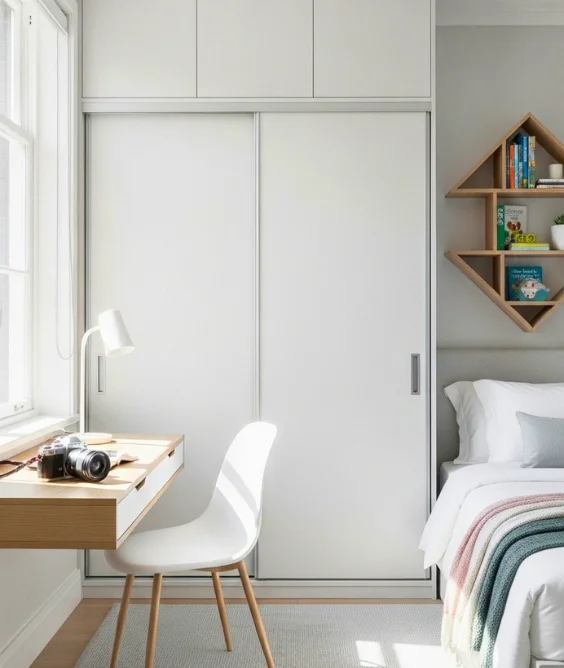
Sliding door wardrobes work well in small bedrooms where space is limited. Since the doors don’t open outward, they save floor space and make the room feel less crowded. This design also creates a clean and modern look, which fits easily into most home styles.
You can improve functionality by adding vertical shelves and pull-out drawers inside. A simple DIY idea is to attach a mirror panel to one sliding door to make the room look bigger. Choose lightweight doors so kids can use them easily. This setup keeps the space organized while making the room more open and comfortable.
3. Corner Wardrobe for Unused Space
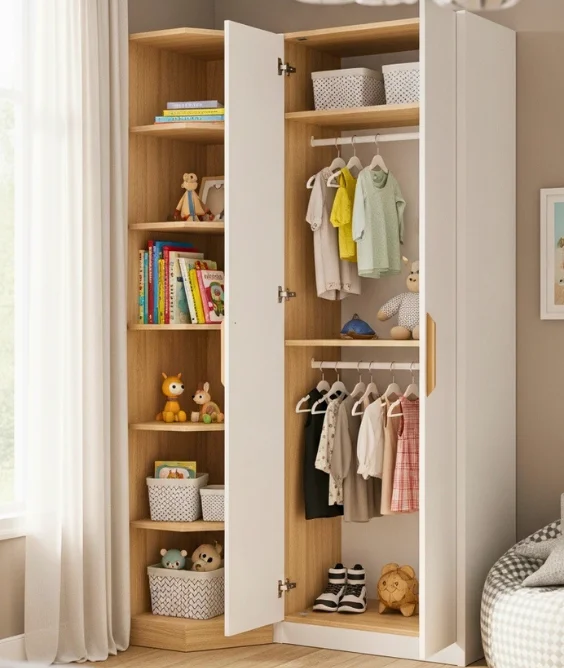
A corner wardrobe helps you use space that often goes unused. It fits neatly into room corners and provides extra storage without taking up the main area. This is especially helpful in small bedrooms where every inch matters.
You can create a simple version using wall-mounted shelves and a hanging rod. Add baskets or boxes for toys and accessories to keep everything tidy. This setup reduces clutter and keeps the center of the room open for play or study. It’s an easy way to add storage without making the room feel crowded.
4. Wardrobe with Built-In Study Desk
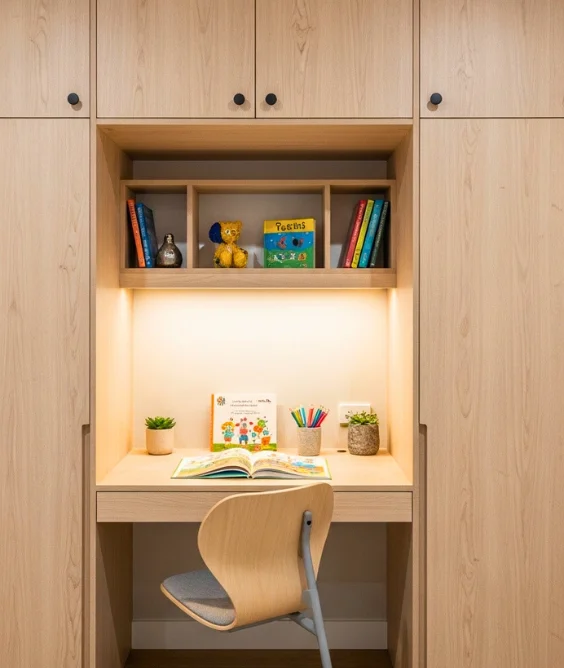
A wardrobe with a built-in desk combines storage and study in one place. It helps save space and keeps everything within reach. This design works well for school-going kids who need a dedicated area for homework and reading.
You can create a simple desk using plywood attached to the wardrobe frame. Add shelves above for books and supplies. Keep the setup clean with small organizers for stationery. This design makes the room more functional and helps kids stay focused while keeping their belongings neatly arranged.
5. Open Shelf Wardrobe for Easy Access
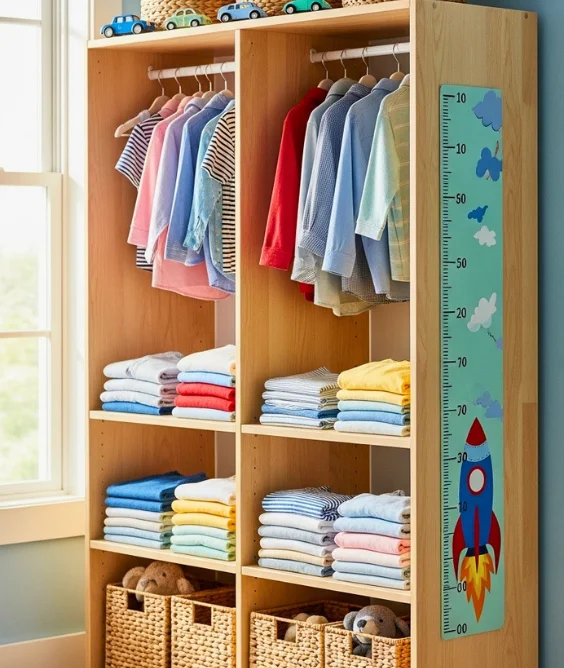
Open shelf wardrobes make it easy for kids to see and access their belongings. Without doors, everything is visible, which helps children find items quickly and stay organized. This design also encourages them to clean up after use.
You can convert an existing wardrobe by removing the doors and adding storage baskets. Use colorful bins to separate clothes, toys, and books. Keep frequently used items on lower shelves for easy reach. This setup promotes independence and makes daily routines smoother for both kids and parents.
6. Chalkboard Wardrobe Doors for Creative Play
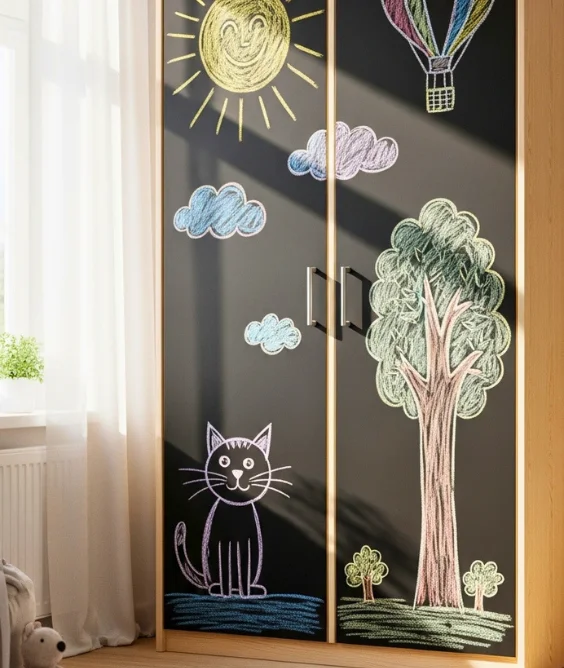
Chalkboard wardrobe doors turn storage into a fun activity zone. Kids can draw, write, and express ideas directly on the surface. It adds personality to the room without taking extra space. This idea works well for younger children who enjoy hands-on creativity.
You can apply chalkboard paint to existing wardrobe doors. It’s affordable and easy to maintain. Keep chalk and a small cloth nearby for quick cleaning. This setup encourages creativity while keeping the room organized. It also reduces the need for extra drawing boards or wall art.
7. Colorful Panel Wardrobes for a Playful Look
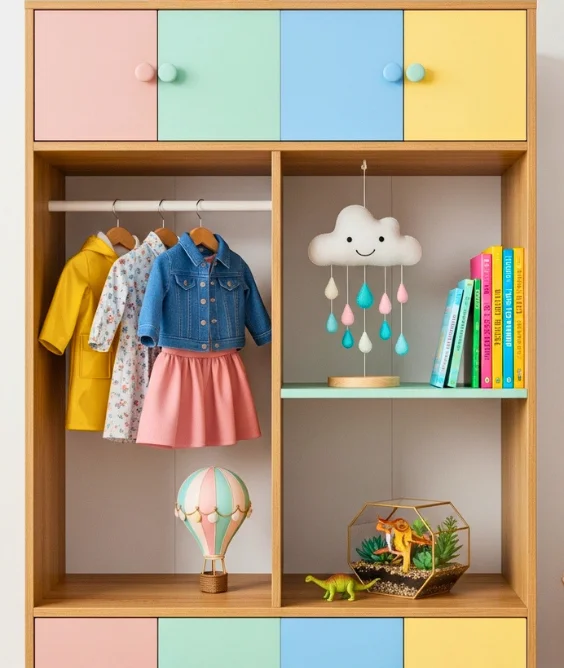
Colorful wardrobes make a kids bedroom feel lively and welcoming. Using soft pastels or bright shades can match different themes and moods. Even simple color changes can refresh the entire room.
You can paint each wardrobe panel in a different color or use removable stickers. This keeps costs low and allows easy updates later. Match colors with bedding or curtains for a balanced look. This approach adds energy to the room while keeping the design simple and practical.
8. Low-Height Wardrobe for Easy Access
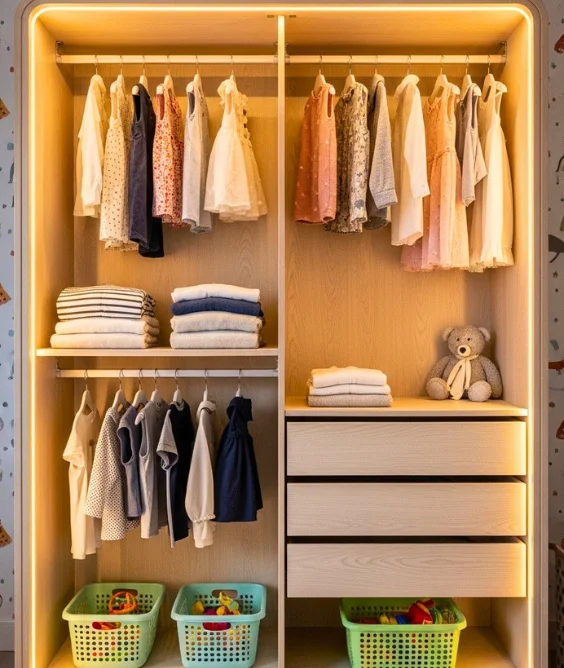
Low-height wardrobes help kids reach their clothes without assistance. This makes daily routines easier and encourages independence. It also reduces clutter since kids can manage their own storage.
Install hanging rods at a lower level and use drawers that slide smoothly. Keep everyday items within reach and store less-used items higher up. Simple handles and soft edges improve safety. This design works well for younger children and adapts easily as they grow.
9. Built-In Wardrobe for a Clean Finish
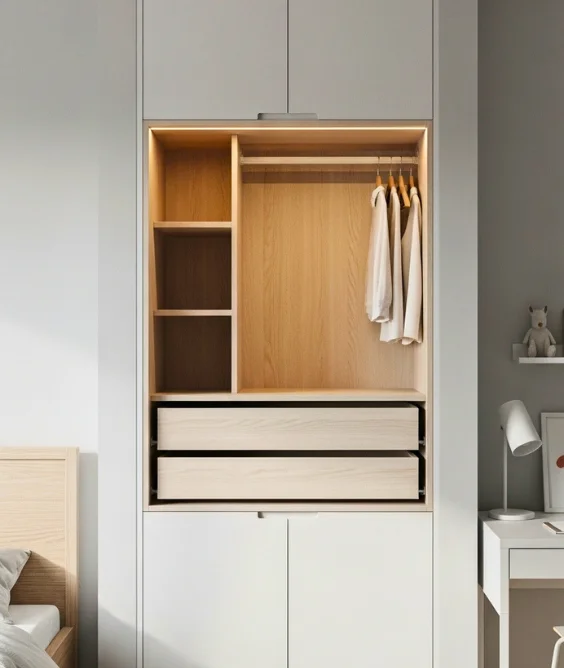
Built-in wardrobes create a neat and seamless look. They fit perfectly into the wall, making the room feel more spacious. This design is ideal for maximizing storage without adding bulky furniture.
You can include floor-to-ceiling shelves and hidden compartments for better organization. Use neutral colors for a simple finish. Though the initial setup may cost more, it saves space and reduces clutter over time. It’s a practical choice for long-term use.
10. Toy Storage Integrated Wardrobe
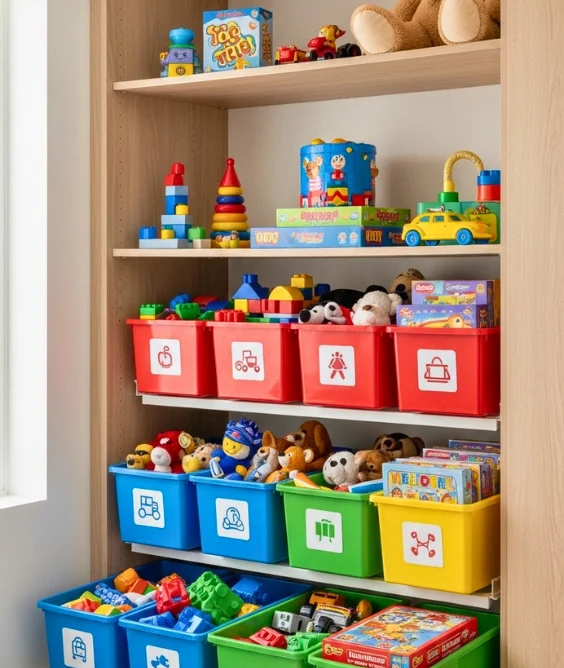
A wardrobe that includes toy storage helps keep everything in one place. Pull-out bins or drawers make it easy to store and access toys. This reduces mess and keeps the room tidy.
Use labeled bins or color-coded boxes to separate items. Place frequently used toys in lower drawers for easy reach. This setup makes cleanup quick and simple. It also teaches kids how to organize their belongings in a fun way.
11. Overhead Cabinets for Seasonal Storage
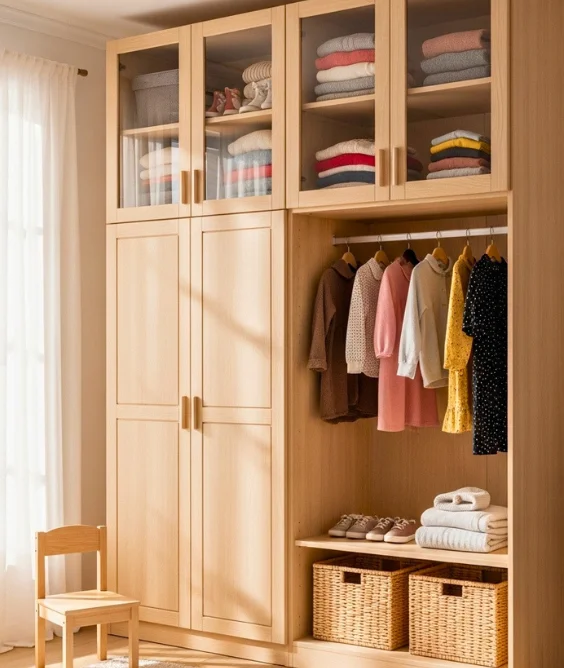
Overhead cabinets help you store items that are not used every day. Things like winter clothes, extra bedding, or special outfits can stay out of the way but still within reach. This keeps the main wardrobe area free for daily essentials.
Use labeled boxes or fabric bins inside the cabinets. This makes it easier to find items later. A simple tip is to rotate items every few months based on the season. If you’re on a budget, add a basic top shelf above your wardrobe instead of installing full cabinets. This small addition creates extra storage without taking up more floor space.
12. Themed Wardrobes for Fun and Personality
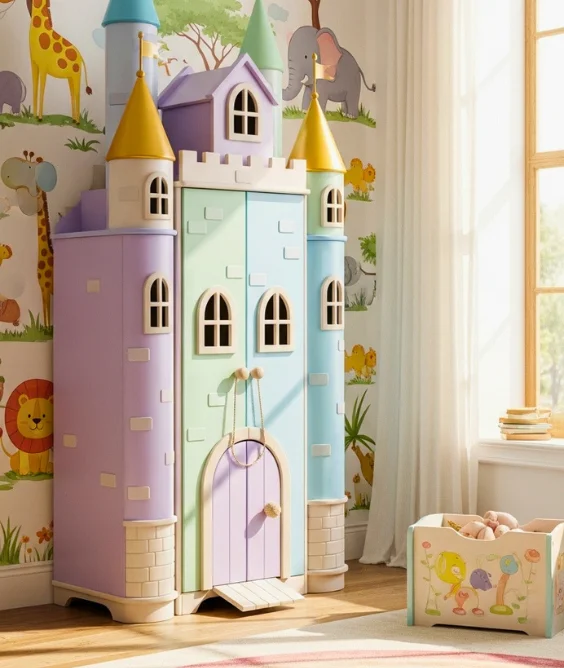
Themed wardrobes make a child’s room feel more personal and fun. Designs inspired by animals, stories, or simple shapes can make storage exciting. Kids often enjoy keeping their space organized when it reflects their interests.
You don’t need expensive materials to create a theme. Use wall decals, stickers, or painted patterns on wardrobe doors. These are easy to change as your child grows. Keep the design simple so it doesn’t overwhelm the room. A themed wardrobe adds charm while still being practical for everyday use.
13. Eco-Friendly Wardrobes with Natural Materials
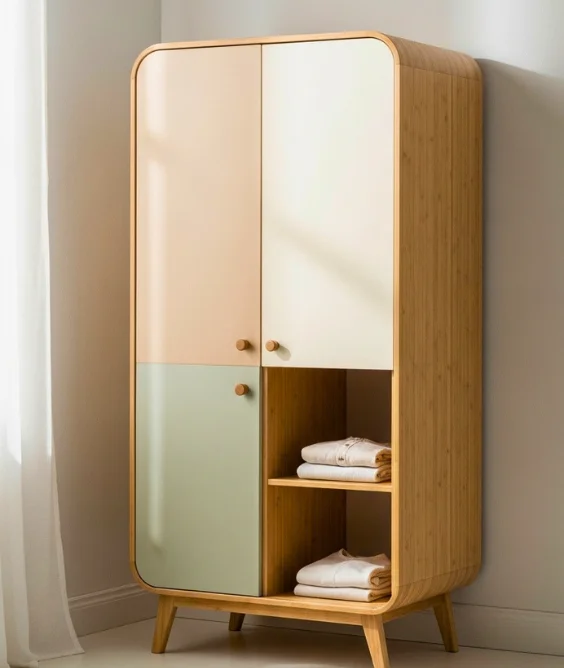
Eco-friendly wardrobes are a safe and durable choice for kids. Materials like bamboo or natural wood are long-lasting and easy to maintain. They also give the room a warm and calm feel.
Choose finishes that are low in chemicals for a safer environment. You can also reuse or repaint old wooden wardrobes instead of buying new ones. This saves money and reduces waste. Simple designs with natural textures work well in any room style and stay useful for years.
14. Vertical Storage Wardrobes for Small Rooms
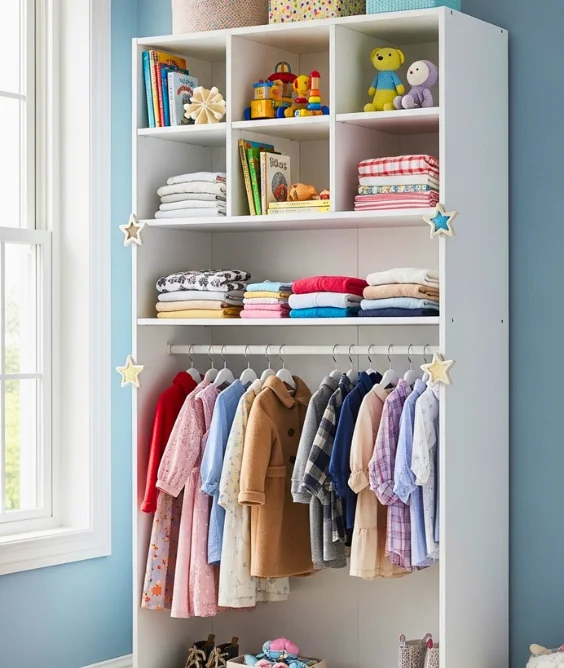
Vertical wardrobes make use of height instead of floor space. This is perfect for small bedrooms where space is limited. Tall units can store more without making the room feel crowded.
Divide the wardrobe into sections. Use the lower part for daily items and the upper part for less-used belongings. Add a small step stool so kids can safely reach higher shelves. This setup keeps everything organized while making the most of limited space.
15. Customizable Panel Wardrobes for Easy Updates
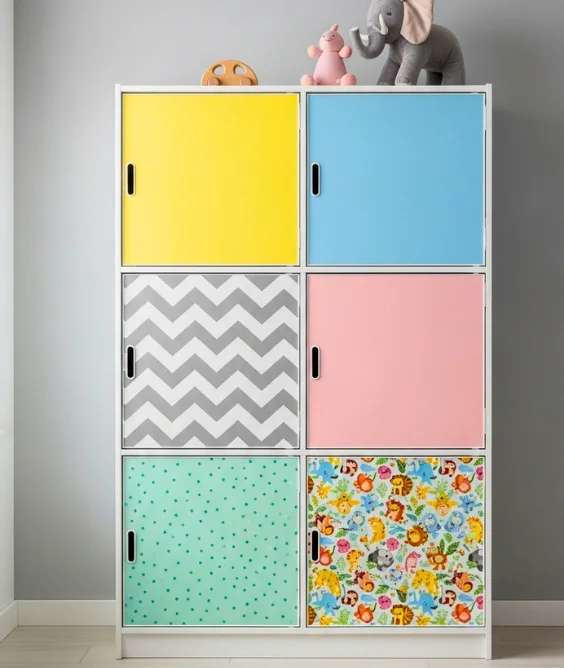
Customizable panel wardrobes allow you to change the look without replacing the whole unit. You can swap panels, colors, or designs as your child grows. This keeps the wardrobe feeling new over time.
Use removable panels, wallpapers, or stick-on designs for easy updates. This is a budget-friendly way to refresh the room without major changes. It also gives kids a chance to be part of the design process. A flexible wardrobe like this adapts to changing tastes while staying practical.
16. Minimalist Wardrobes for a Clean Space
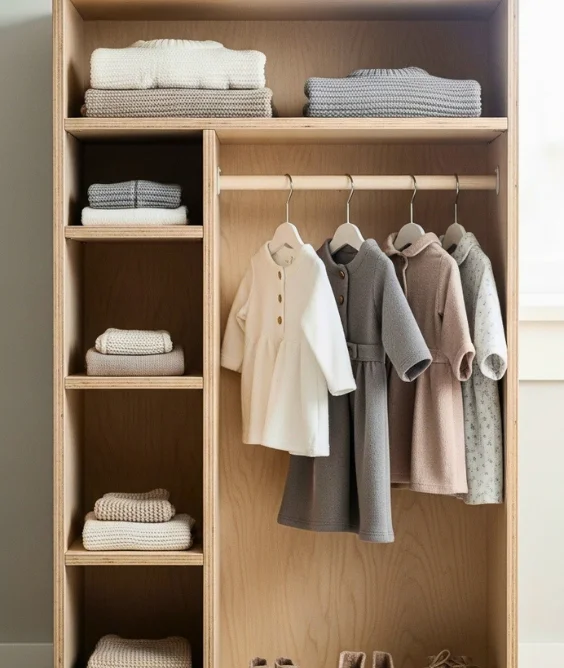
A minimalist wardrobe keeps the room calm and clutter-free. It focuses on simple design and only the essentials. This makes it easier for kids to find what they need without feeling overwhelmed.
Choose a wardrobe with fewer compartments and clean lines. Avoid overfilling it. Keep only daily-use clothes inside and store extras elsewhere. A quick DIY tip is to declutter every few months and remove unused items. This setup saves time during daily routines and keeps the room looking neat with very little effort.
17. Pull-Out Hanging Rails for Flexible Storage
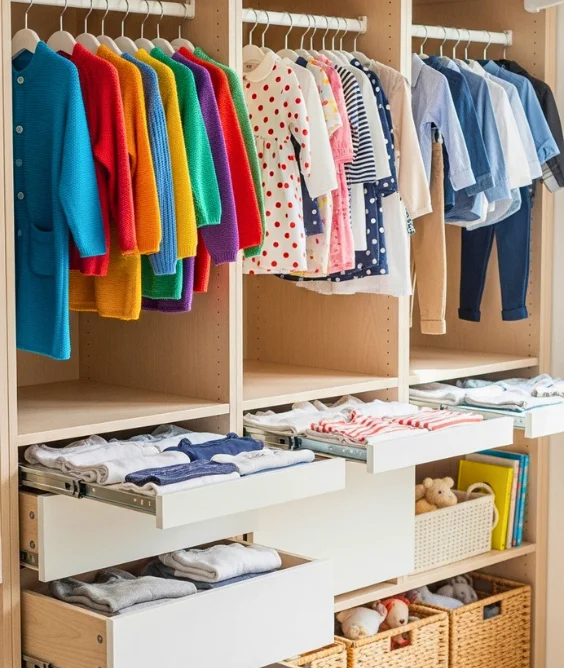
Pull-out hanging rails add flexibility to any wardrobe. They can be extended when needed and pushed back to save space. This makes it easier to access clothes without digging through piles.
You can install a simple sliding rail inside your wardrobe using basic hardware. It’s an affordable upgrade that improves organization instantly. Use it for school uniforms or frequently worn outfits. This keeps everything visible and easy to reach while maintaining a tidy appearance.
18. Hidden Storage Compartments for Extra Space
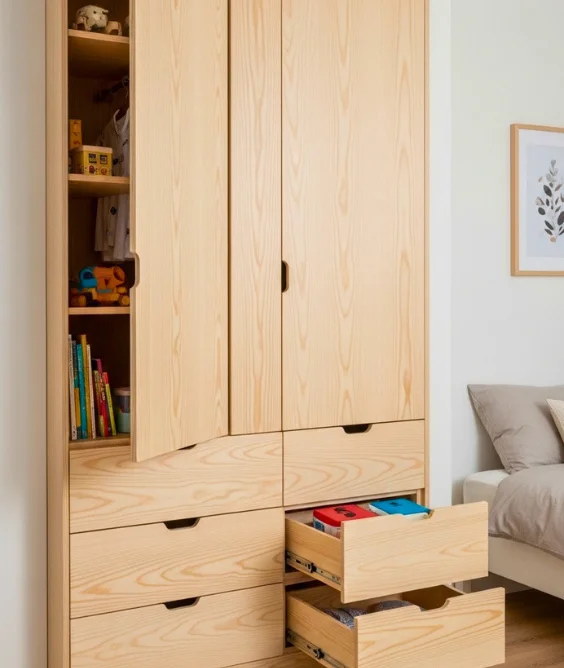
Hidden compartments are great for storing extra items without adding visible clutter. They can hold seasonal clothes, accessories, or items you don’t use often. This keeps the wardrobe looking clean and simple.
You can create hidden storage using sliding panels or double-layer shelves. Even a false back panel can add extra space. This idea works well in small rooms where storage is limited. It helps you keep things organized without making the wardrobe look crowded.
19. Wardrobes with Built-In Lighting
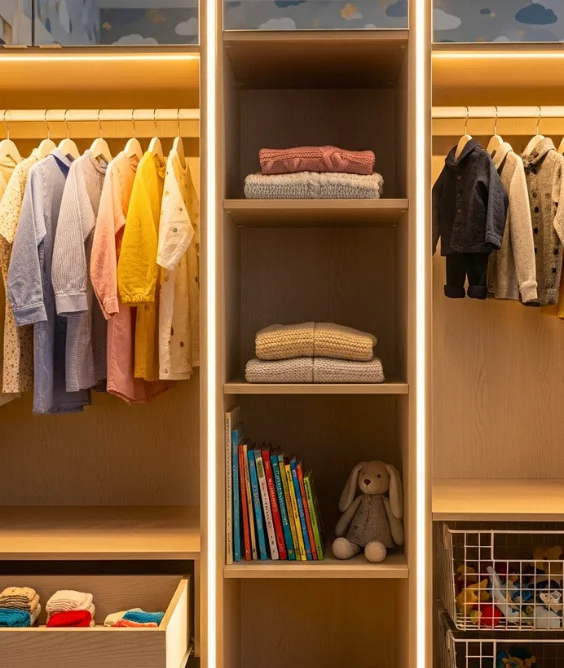
Built-in lighting makes it easier to see inside the wardrobe, especially in low-light rooms. It helps kids find their clothes quickly and keeps everything visible.
Use battery-operated LED lights for a simple and affordable solution. Stick them inside shelves or along the edges. Motion-sensor lights are also a good option. This small upgrade improves daily use and adds a modern touch without much effort.
20. Dual-Purpose Wardrobe with Daybed
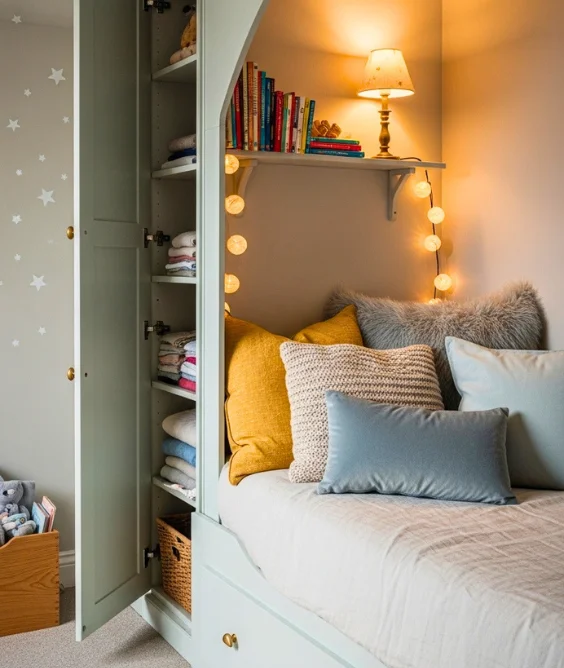
A wardrobe combined with a daybed is perfect for saving space. It brings storage and sleeping into one compact design. This works especially well in smaller bedrooms.
You can build a simple frame where the wardrobe surrounds the bed. Add shelves above or beside the sleeping area for extra storage. Keep the design light and simple to avoid making the room feel crowded. This setup creates a cozy and functional space where everything is within reach.
21. Glass Panel Wardrobes for a Light Feel
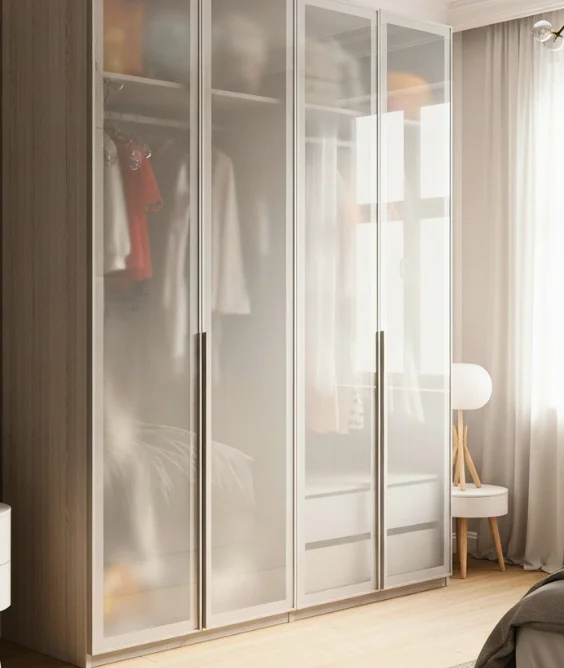
Glass panel wardrobes can make a room feel more open and bright. They reflect light and give a softer look compared to solid doors. Frosted or tinted glass works best for kids’ rooms since it hides clutter while still looking stylish.
You can update an existing wardrobe by replacing a few panels with acrylic or lightweight glass alternatives. This keeps costs lower and improves safety. Pair the panels with simple frames and soft colors to maintain a calm look. This design works well in smaller rooms where extra light can make a big difference.
22. Budget DIY Wardrobe Makeover
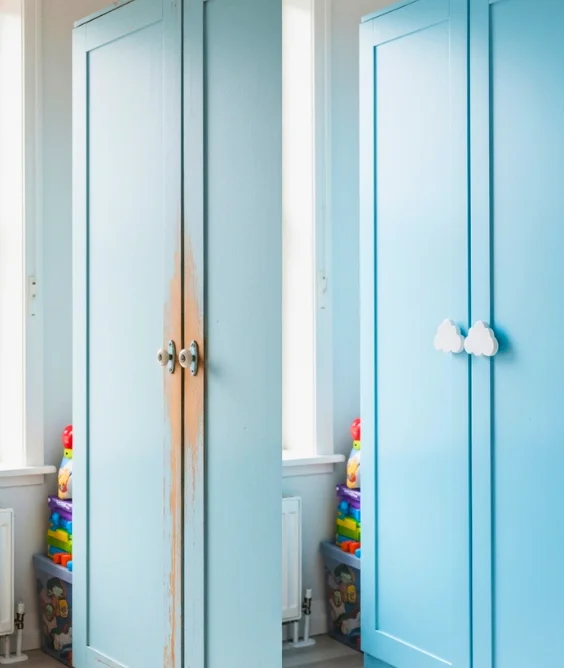
A wardrobe makeover is one of the easiest ways to refresh a kids bedroom. Instead of buying new furniture, you can improve what you already have. Simple changes can make a big visual impact.
Start by repainting the wardrobe in a light or playful color. Replace old handles with fun shapes or bright finishes. Add stickers or decals for a personal touch. You can also line shelves with patterned paper for a quick update. This approach saves money and allows you to customize the design based on your child’s preferences.
23. Smart Labeling for Easy Organization
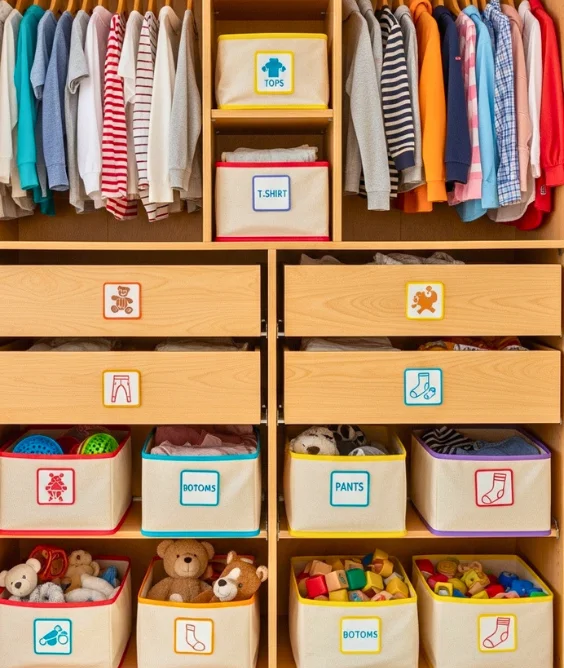
Labels help kids keep their wardrobe organized without confusion. When everything has a clear place, it becomes easier to clean up and find items quickly. This is especially useful for younger children.
Use color-coded labels or simple icons for clothes, toys, and accessories. You can print labels or make them using paper and tape. Place them on bins, drawers, and shelves. This system builds good habits and keeps the wardrobe tidy with less effort every day.
24. Wardrobes with Pull-Out Toy Baskets
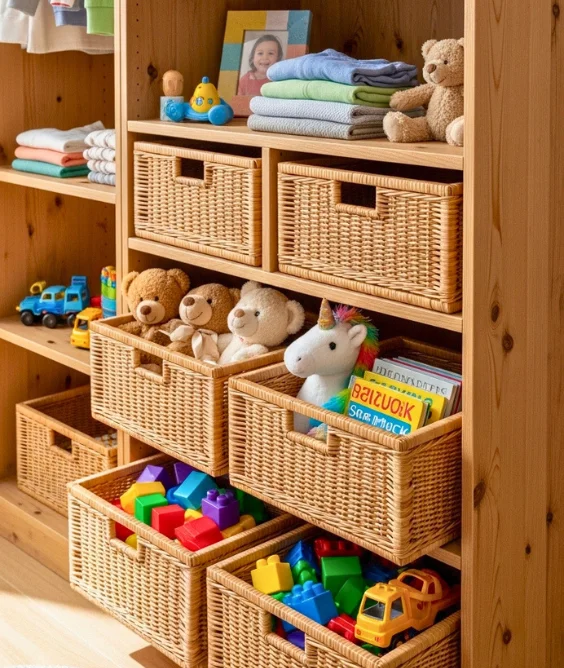
Pull-out baskets are perfect for storing toys inside the wardrobe. They slide out easily, making it simple for kids to access and put away items. This keeps toys hidden but still within reach.
You can install wire or wooden baskets inside lower sections of the wardrobe. Choose lightweight options so kids can use them safely. Assign each basket for a specific type of toy to avoid mixing items. This setup reduces clutter and makes cleanup quick and manageable.
25. Multi-Zone Wardrobes for Better Organization
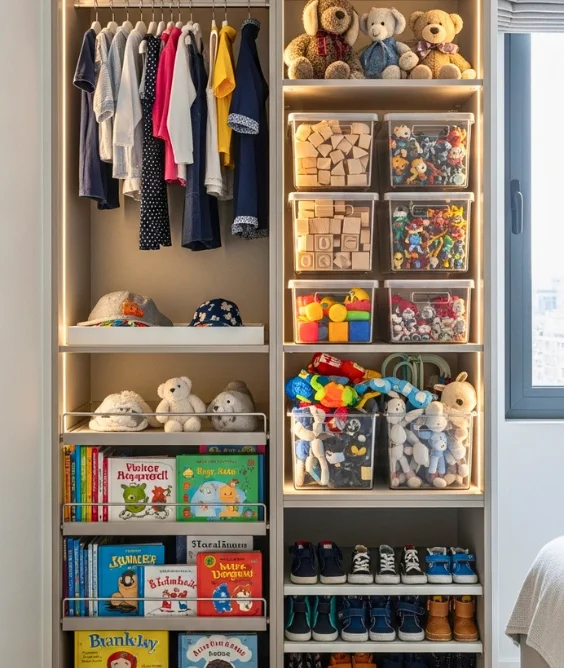
A multi-zone wardrobe divides storage into clear sections. Each zone is used for a different purpose, such as clothes, toys, or books. This layout makes organization simple and practical.
You can create zones using shelves, dividers, and bins. Keep daily items in easy-to-reach areas and store less-used items higher up. A simple DIY tip is to use boxes or separators to define each section clearly. This method helps kids understand where things belong and keeps the wardrobe neat every day.
Conclusion
Kids bedroom wardrobe designs work best when they are simple, flexible, and easy to use. Small changes like adding shelves, using labels, or updating colors can make a big difference. Focus on designs that save space and grow with your child over time. Start with what you have, make gradual improvements, and create a wardrobe that stays organized and practical every day.