A modern kids desk area inside the bedroom helps build daily routines and keeps school supplies under control. With smart layouts and simple storage, even small bedrooms can support homework, reading, and creative time. These ideas focus on affordable setups that are easy to maintain and flexible as kids grow.
1. Window-Side Study Nook
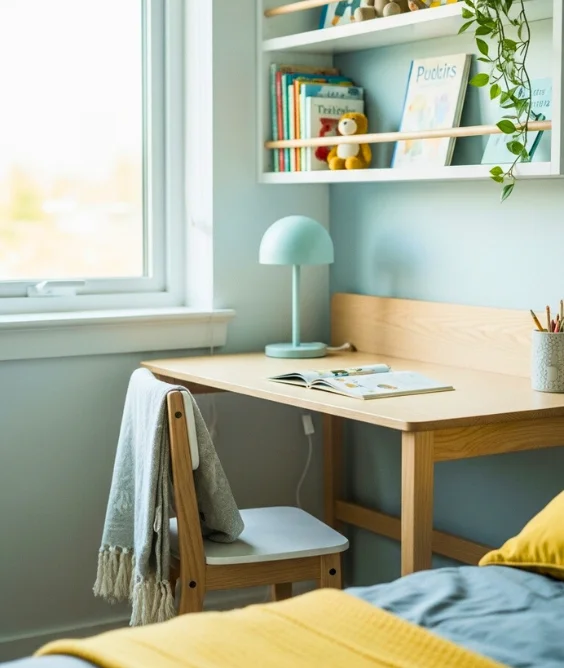
A desk placed near a window makes homework feel lighter and more comfortable. Natural daylight helps kids stay alert during reading and writing time. A narrow desk fits well without blocking curtains or airflow.
Add one wall shelf above the desk for books and pencil holders. Keep only daily supplies on the surface so cleanup stays quick. This setup works well in small bedrooms where every inch matters.
2. Floating Wall Desk
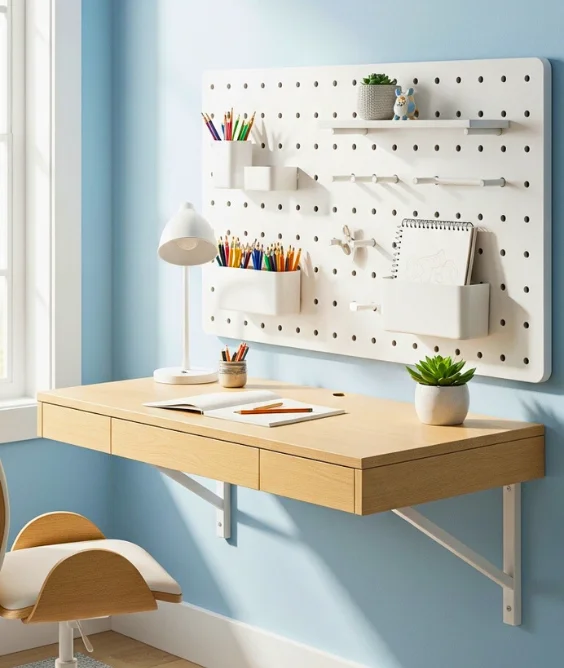
A floating desk keeps the floor clear and makes the room feel open. A simple board and wall brackets are enough for an affordable DIY build. Chairs can slide underneath when the desk is not in use.
Use a pegboard or narrow shelf above to store supplies vertically. This keeps everything within reach and helps the desk stay tidy without extra furniture.
3. Corner Desk Setup
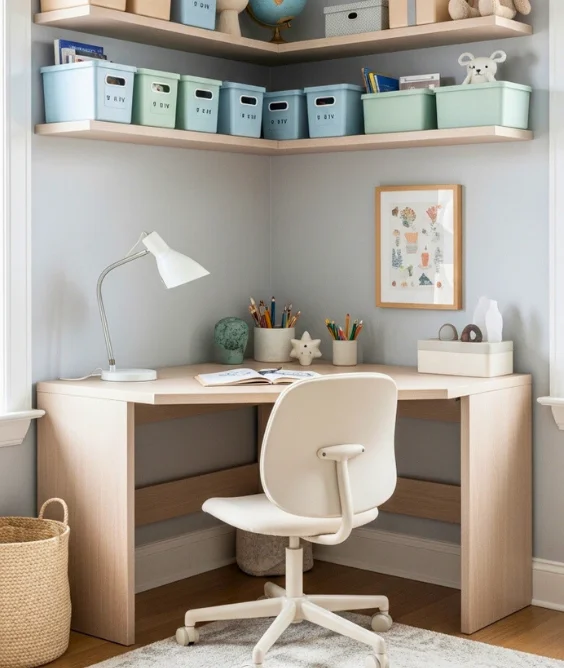
Corners are easy to overlook, but they make great desk spots. A corner desk turns unused space into a focused homework area. Facing the wall also helps limit visual distractions.
Add shelves above for books and storage bins. Keep toys on the opposite side of the room so the desk area feels calm and purposeful.
4. Adjustable Desk for Growing Kids
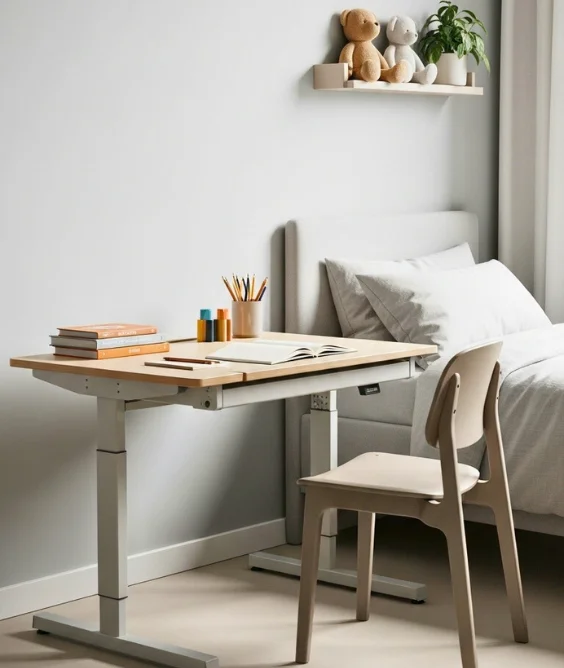
An adjustable desk changes height as kids grow, making it a long-term choice. Pair it with an adjustable chair so feet rest flat on the floor during work time. This supports better sitting habits.
Keep accessories simple and avoid overcrowding the desk. A clear surface helps kids focus and makes daily cleanup easier.
5. Shared Desk for Siblings
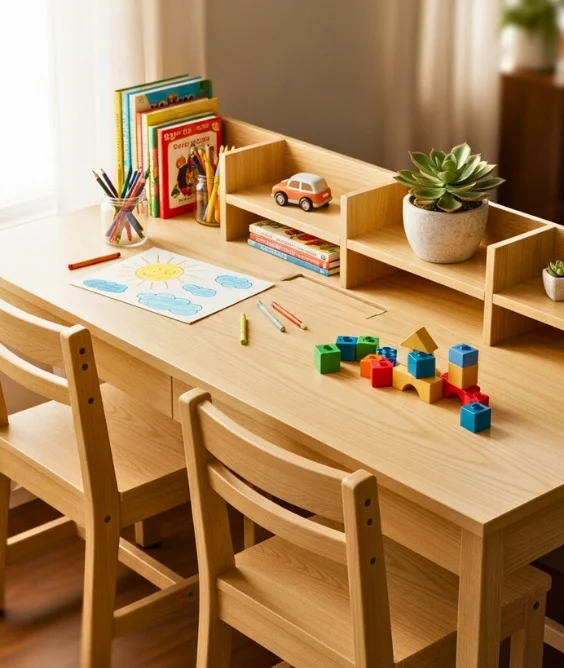
A shared desk works well in bedrooms used by siblings. One long surface allows both kids to work at the same time. Desk mats or trays help define personal space.
Give each child their own bin or drawer for supplies. Clear separation helps reduce mess and keeps the desk organized throughout the day.
6. Closet Homework Station
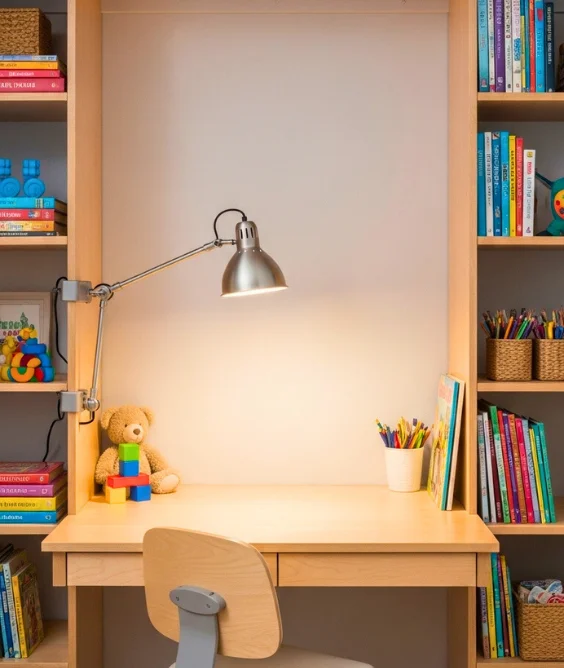
An unused closet can become a quiet homework spot. Removing the doors instantly opens the space and makes room for a small desk. This helps keep study time separate from play areas.
Use side shelves to store books and supplies. A small wall light brightens the space without taking room on the desk. A curtain can hide the area after homework time.
7. Desk Under a Loft Bed
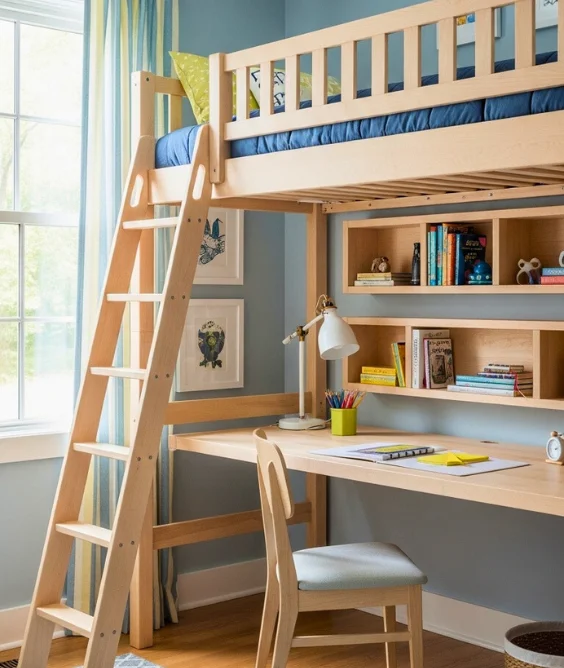
A loft bed creates extra space for a desk underneath. This setup works well in small bedrooms where floor space is limited. Sleep and study zones stay clearly separated.
Add wall shelves for books and bins. A bright desk lamp helps keep the area well lit. Rolling drawers under the desk add storage without crowding.
8. Minimal Desk with Vertical Storage
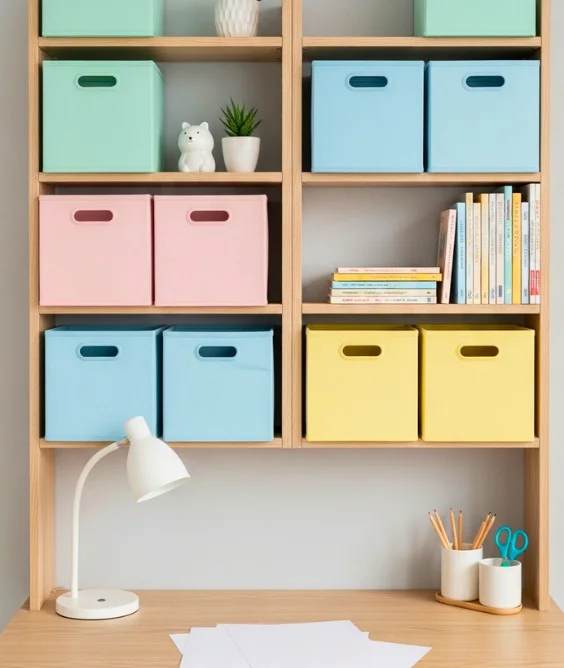
Vertical storage keeps the desk surface clear and easy to use. Tall shelves hold books and storage boxes without taking extra floor space. This layout helps rooms feel less crowded.
Place daily items on lower shelves and extras higher up. Lightweight bins make it easy for kids to put things away on their own.
9. Desk and Reading Nook Combo
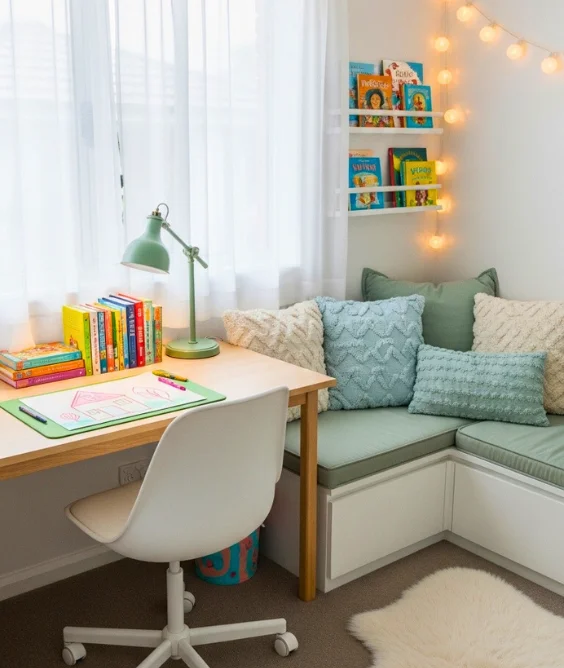
Combining a desk with a reading nook supports different learning activities. Kids can switch between writing and reading without leaving the room. This makes the space more inviting.
Use a low shelf or basket to store books between the two areas. Soft cushions nearby add comfort without creating clutter.
10. Pegboard Desk Wall
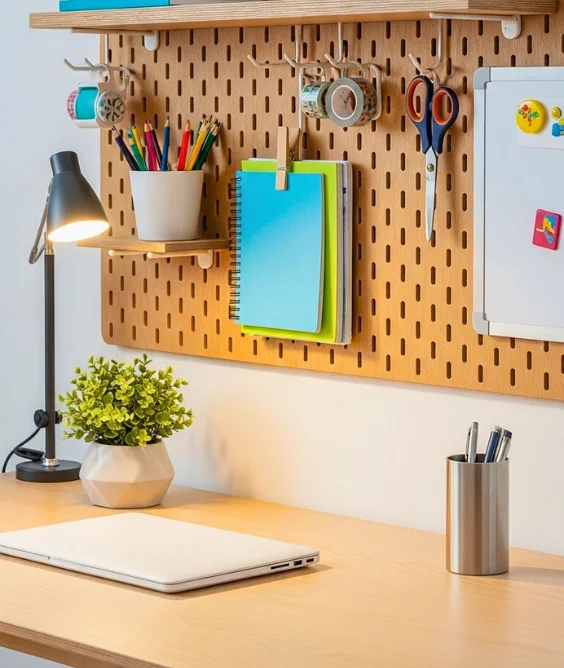
A pegboard wall keeps supplies visible and easy to reach. Hooks and small baskets hold tools without crowding the desk. Items can be moved as school tasks change.
This setup encourages kids to return items to their place. It also keeps the desk surface clear for daily work.
11. Montessori-Style Desk Area
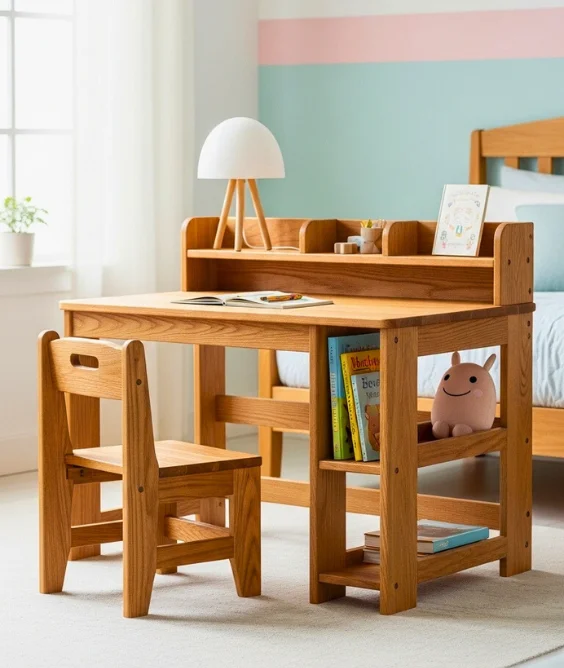
A Montessori-style desk focuses on independence and ease of use. Furniture sits at child height so kids can sit down and start work on their own. The setup feels calm and simple.
Open shelves replace drawers so supplies stay visible. Fewer items help reduce distraction and make cleanup faster at the end of the day.
12. Fold-Down Wall Desk
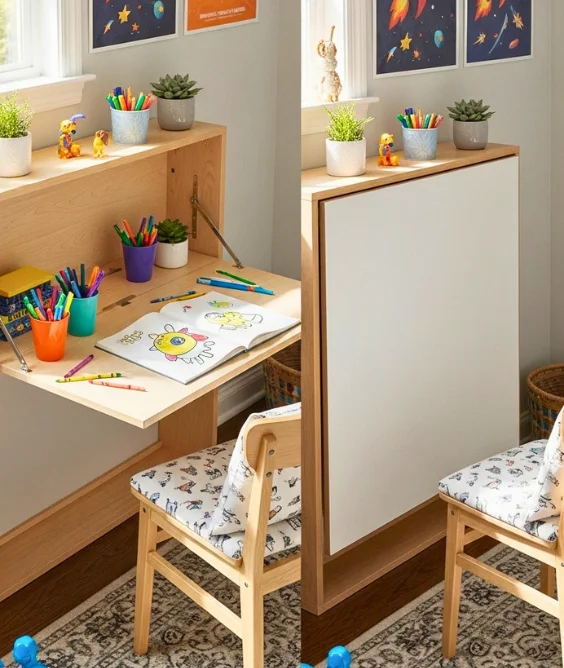
A fold-down desk works well in tight bedrooms. It opens only during homework time and folds away when finished. This keeps the room feeling open and uncluttered.
Add a narrow shelf above the desk for books and pencil cups. Lightweight chairs can be moved aside when the desk is closed.
13. Desk with Built-In Drawers
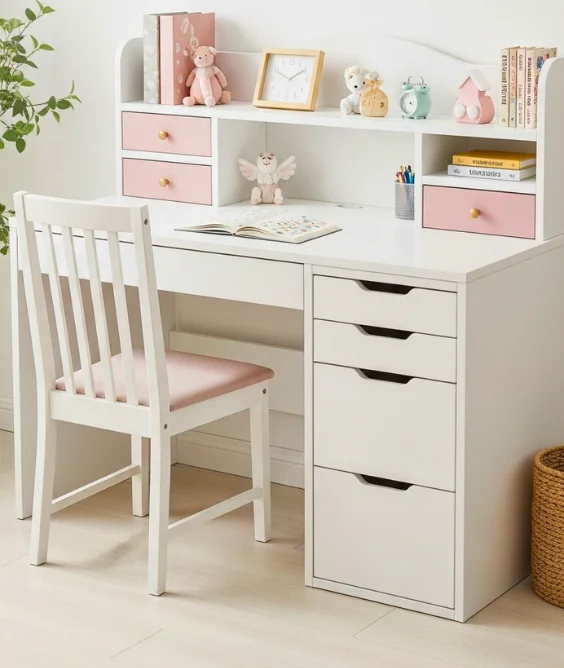
Built-in drawers help hide school supplies while keeping them close. Shallow drawers are great for paper, pencils, and small tools. This reduces the need for extra storage units.
Use simple dividers inside drawers to keep items sorted. Kids can find what they need quickly and return items easily.
14. Two-Zone Desk Layout
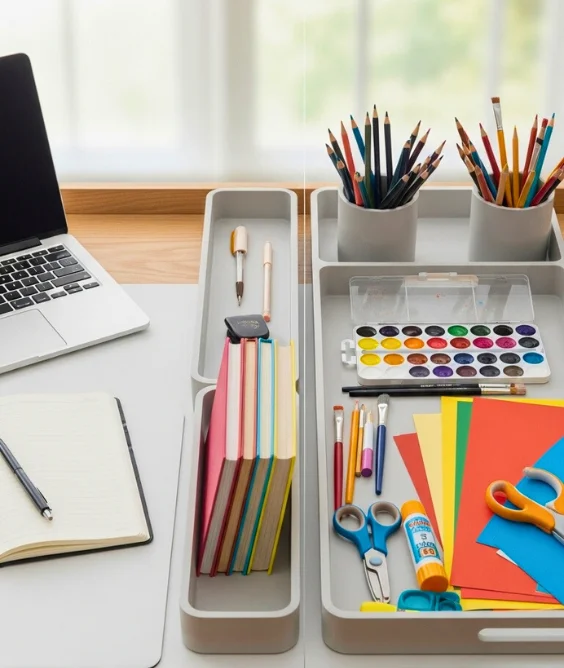
A two-zone desk helps manage different activities. One side is used for writing and reading, while the other holds art supplies. This keeps projects from mixing.
Desk mats or trays help define each zone. Cleanup becomes quicker because each item has a clear place.
15. Built-In Desk Under a Window
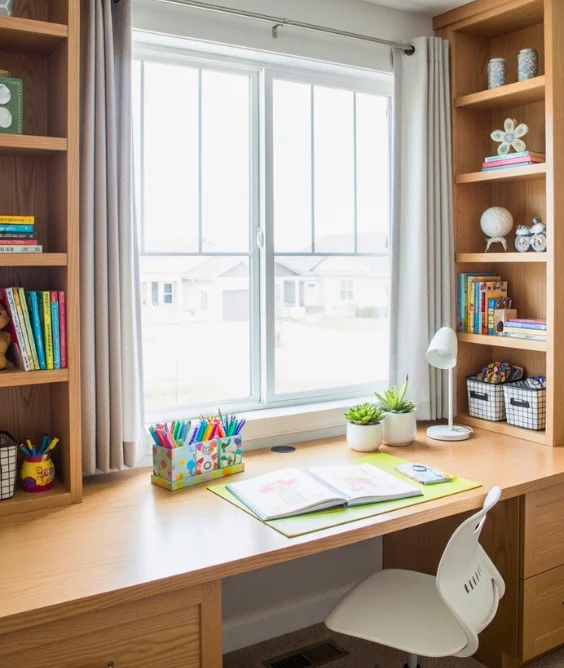
A built-in desk under a window uses space wisely. Natural light keeps the area bright during the day. Side shelves add storage without blocking the view.
This setup feels stable and long-lasting. It also helps keep the desk in the same spot as kids grow.
16. Tech-Safe Desk Setup
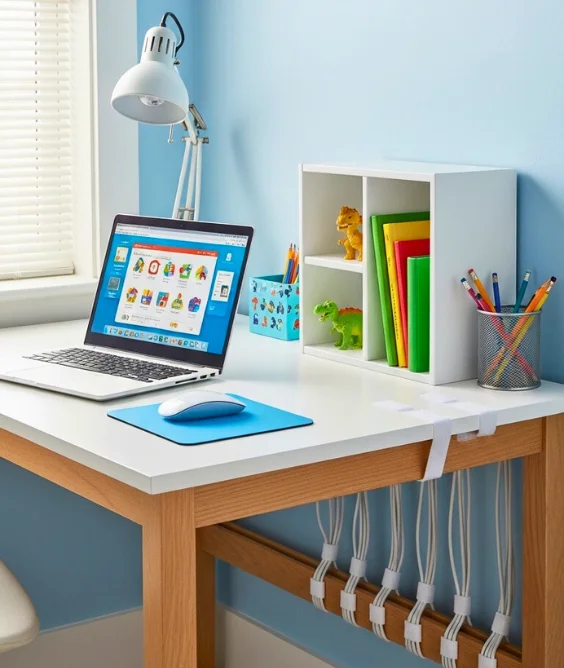
A tech-safe desk setup helps keep devices organized and tidy. Cables can be guided along the wall using clips so they stay off the floor. This keeps the desk looking clean and easy to manage.
Place power strips out of reach and store chargers in a small tray. A defined device area helps kids pack up quickly after use.
17. Soft Rug Under Desk
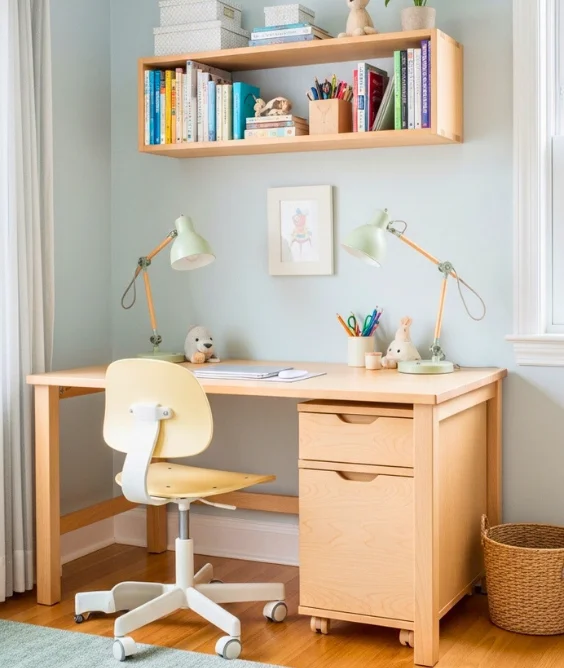
A rug under the desk adds comfort and warmth. It softens the space and reduces chair noise on hard floors. Low-pile rugs are easy to clean and work well in bedrooms.
Rugs also help visually mark the study area. This makes the desk feel like its own zone within the room.
18. Back-of-Door Desk
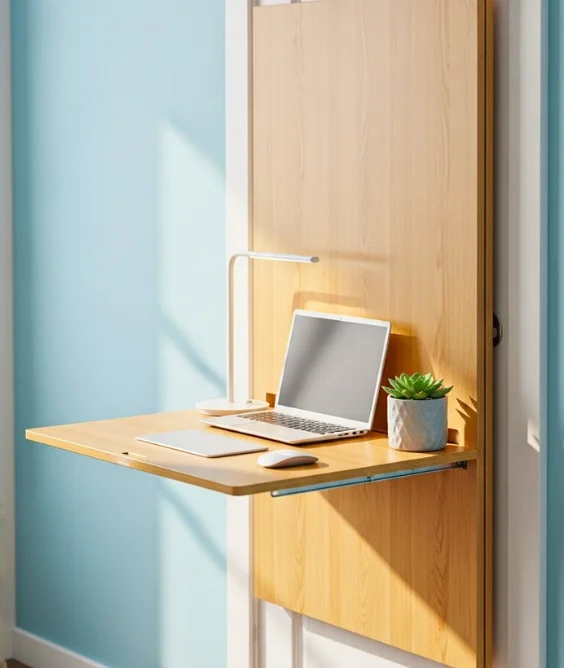
The back of a door can hold a compact fold-out desk. This idea works well when wall space is limited. The desk opens only when needed.
Add hanging pockets nearby for supplies. When closed, the desk disappears and keeps the room uncluttered.
19. Color-Coded Desk Organization
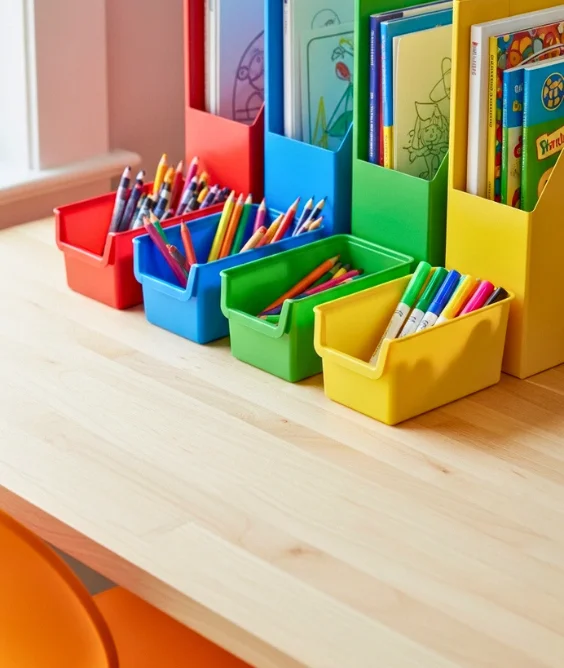
Color-coded organization helps kids sort items quickly. Each subject can have its own color using folders, bins, or trays. This makes daily cleanup easier.
Kids learn where items belong without reminders. The system stays simple and easy to maintain.
20. Easy Desk Reset Setup
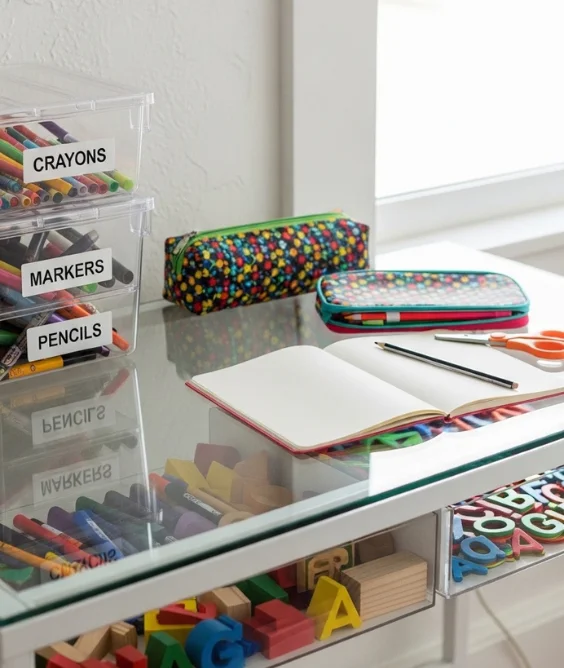
An easy desk reset setup supports daily routines. Keep only essential items on the desk surface. Everything else goes into labeled bins or drawers.
This makes end-of-day cleanup quick. A tidy desk feels ready for the next morning.
Conclusion
A modern kids desk area can fit into almost any bedroom with the right layout and storage choices. By using simple furniture, clear zones, and easy organization systems, families can create study spaces that stay neat and practical. Small changes make everyday routines smoother and help kids feel comfortable using their desk every day.