
A blank dining room wall can feel awkward and unfinished. The good news is that dining room wall decor does not have to be complicated or expensive. With a few thoughtful choices, that empty wall can turn into the highlight of the space. Many homes use a mix of wall art, mirrors, shelves, and simple DIY ideas to create character without spending a fortune.
10 Dining Room Wall Decor Ideas
The following are the Dining Room Decor Ideas:
1. Oversized Canvas Wall Art

Large dining room walls often look empty when small decorations are used. A single oversized canvas artwork can instantly solve this problem. One big piece creates a focal point and helps the room feel balanced. Abstract paintings work well in modern spaces, while landscape photography or simple black-and-white art fits classic interiors.
Placement is important for a clean look. Hang the center of the artwork about 57–60 inches from the floor so it aligns with natural eye level. If a buffet or console table sits below the wall art, leave about 6–8 inches of space between the furniture and the frame. This spacing keeps the arrangement visually comfortable.
Affordable options are easy to find. Printable art files can be downloaded and printed locally, or you can paint a simple abstract design on a blank canvas. When paired with a plant or small lamp on the console table below, the wall instantly feels complete and stylish.
2. Grid Gallery Wall

A grid gallery wall creates an organized and polished appearance. This style uses identical frames arranged in straight rows and columns. The symmetry makes the wall feel balanced and visually calm, which works well in modern dining rooms.
Start by choosing frames that match in size and color. Arrange them in rows and keep about 2–3 inches of spacing between each frame. This spacing keeps the layout clean and intentional. Artwork choices can include simple prints, botanical illustrations, or family photos.
Before hanging anything, test the arrangement using paper templates taped to the wall. This makes it easier to adjust spacing and placement. Budget-friendly frames from discount stores can be painted the same color to create a unified look. The final result feels professional without requiring expensive decor.
3. Eclectic Salon-Style Gallery Wall

A salon-style gallery wall offers a more relaxed and artistic approach. Instead of matching frames, this layout uses a mixture of sizes, shapes, and artwork styles. The result feels personal and full of character.
Start by placing one larger artwork near the center of the wall. Then arrange smaller frames around it to build a balanced cluster. Maintain roughly 2 inches between pieces so the display still looks cohesive. Mixing artwork types such as photography, sketches, and paintings adds visual interest.
Secondhand shops are great places to find unique frames at low prices. Even mismatched frames look beautiful together when grouped on the wall. Lay the arrangement out on the floor first before hanging it. This approach helps you experiment until the composition feels right.
4. Decorative Mirror Wall

Mirrors are a clever way to decorate dining room walls while improving the room’s brightness. A large decorative mirror reflects natural light and makes smaller dining rooms appear more spacious.
A single mirror placed above a buffet or console table works especially well. Round mirrors soften the look of modern interiors, while rectangular mirrors provide a classic style. If you want more detail, several smaller mirrors can be arranged in a pattern similar to a gallery wall.
Affordable mirrors are often available at thrift stores or flea markets. Updating the frame with paint can give the mirror a completely new appearance. Leave 6–8 inches of space between the mirror and the furniture below so the layout feels balanced and comfortable.
5. Floating Shelf Display
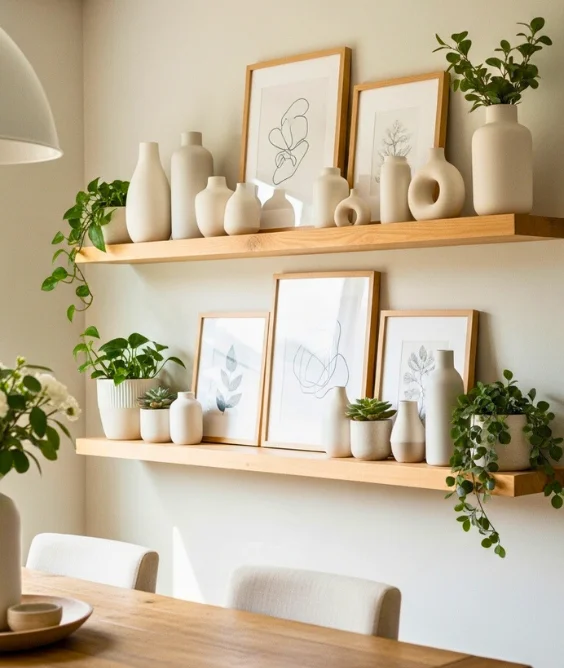
Floating shelves combine decoration with practical display space. They allow you to change your wall styling whenever you want. Install two or three shelves above a buffet table or along the dining wall to create vertical visual interest.
A simple styling method works well on shelves. Combine one framed artwork, a small plant, and a decorative ceramic piece. This mix creates balance while keeping the shelves from looking crowded. Leaving some empty space helps each object stand out.
Budget-friendly shelves can be made using basic wooden boards and brackets from a hardware store. Sand and stain the wood to match your dining furniture. The shelves provide a flexible way to display seasonal decor, dishes, or collectibles while keeping the wall visually interesting.
6. Painted Dining Room Accent Wall

A painted accent wall is one of the easiest ways to give your dining room personality. Instead of decorating every wall, focus on the wall behind the dining table. A deep shade like charcoal, navy, or forest green creates contrast and instantly draws attention.
Paint is also one of the most budget-friendly decor options. A single gallon of paint can completely change the mood of the room. Many homeowners also experiment with simple geometric shapes created using painter’s tape. This approach adds visual interest without needing additional wall art.
Keep the rest of the decor minimal so the wall color remains the highlight. A simple framed print or mirror works nicely on top of the painted wall. When done correctly, an accent wall gives the dining area a bold yet balanced appearance without overwhelming the room.
7. Wood Panel Feature Wall

Wood paneling adds texture and warmth to a dining room. Styles such as board and batten or vertical slats create subtle architectural detail that transforms a plain wall into a design feature.
This idea works well for people who prefer neutral decor but still want the wall to feel interesting. Painted panels in white or beige create a calm modern look. Natural wood finishes bring warmth to farmhouse or rustic dining spaces.
DIY versions are possible using inexpensive wood strips from a hardware store. Attach the strips evenly to the wall, then paint them the same color as the wall for a subtle textured effect. Vertical lines also make ceilings appear taller, which helps smaller dining rooms feel more spacious.
8. Decorative Plate Wall
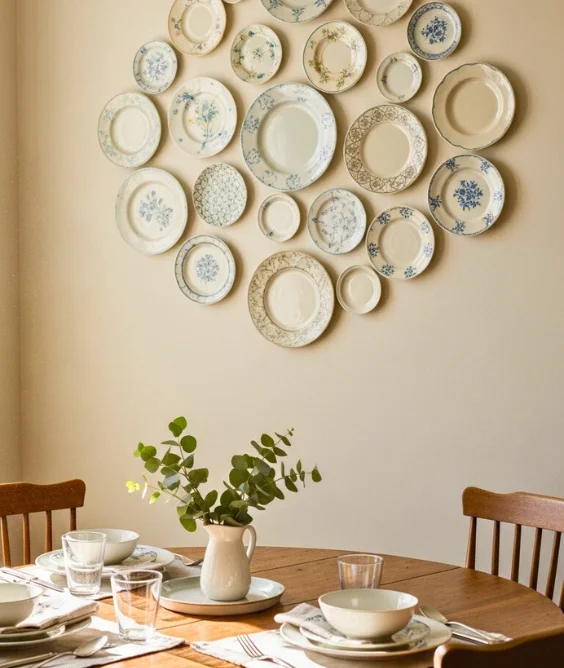
A decorative plate wall brings personality and tradition into the dining area. Plates naturally connect with the purpose of the room, making them a meaningful decor choice.
Arrange plates in a circular or clustered layout above the dining table. Mixing plain white dishes with patterned ones adds variety while still keeping the design cohesive. Plate hangers are inexpensive and easy to install.
Secondhand stores and flea markets are excellent places to find unique plates at low prices. Vintage dishes often feature interesting patterns and colors that stand out on the wall. When grouped together, these plates create a charming display that feels personal and welcoming.
9. Vertical Garden Wall

A vertical plant wall introduces greenery and natural texture into the dining space. Instead of placing plants only on tables or shelves, you can mount planters directly onto the wall.
Small wall-mounted pots arranged in rows create a simple garden effect. Trailing plants such as pothos or ivy work particularly well because they cascade slightly downward. The greenery softens the look of the room and adds a calming atmosphere.
A wooden frame can hold multiple small planters if you prefer a more structured layout. If maintaining plants feels challenging, high-quality artificial greenery can provide a similar visual effect. Either option adds life and color to an otherwise empty dining room wall.
10. Wall Sconces with Artwork

Lighting can play a major role in wall decor. Wall sconces placed beside artwork create a balanced and elegant arrangement while also improving the room’s atmosphere during evening meals.
Install two sconces on either side of a large artwork piece or mirror. The lighting frames the decor and creates a cozy glow that makes the dining area feel inviting. Picture lights placed above artwork are another simple option.
Plug-in sconces are a convenient choice because they do not require electrical changes. They are also widely available in affordable styles. When decor and lighting work together, the wall becomes both functional and visually appealing.
Conclusion
Decorating a dining room wall does not require expensive furniture or complicated renovations. Simple ideas such as accent paint, wood panels, decorative plates, plant walls, and wall lighting can completely change how the space feels.


