That big blank wall can feel intimidating. It makes the whole room look unfinished — no matter how nice your furniture is.
But here’s the good news: a large wall isn’t a problem. It’s an opportunity. When styled correctly, it becomes the focal point that makes your entire space feel complete and designer-level polished.
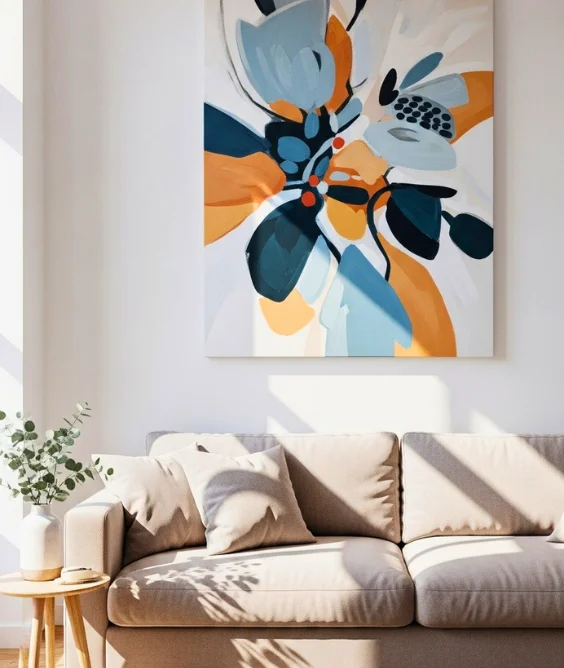
Let’s walk through this step by step so your wall feels balanced, intentional, and eye-catching.
Step 1: Start With the Right Scale
The most common mistake? Hanging art that’s too small.
For walls above furniture, aim to fill 50–75% of the wall width.
If your sofa is 84 inches wide, your wall decor should span about 42–63 inches.
Quick Placement Rules:
- Center art at 57–60 inches from the floor.
- Hang pieces 6–8 inches above sofas or consoles.
- When unsure, go bigger.
Before drilling holes:
- Tape paper outlines to the wall.
- Lay everything out on the floor.
- Take a photo and review proportions.
This simple prep prevents costly mistakes.
Step 2: Choose One Oversized Statement Piece
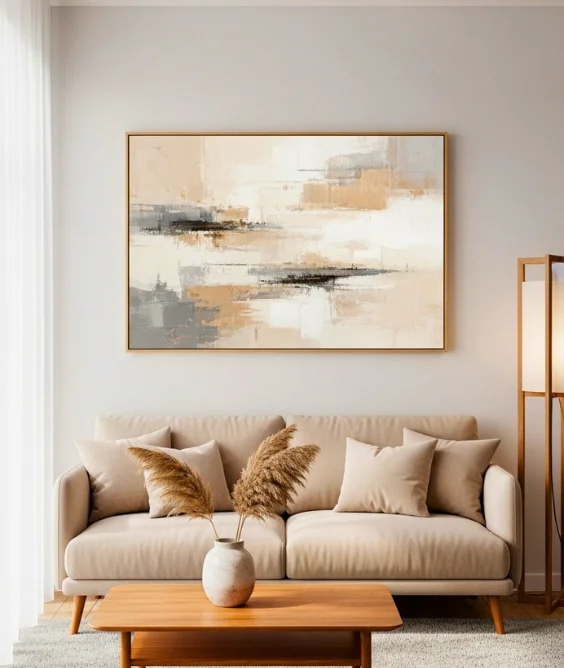
If you want the easiest solution, go with one large statement piece.
Oversized wall art (40–48+ inches), a large mirror, or even a mural can instantly anchor the space and eliminate visual clutter.
Great Options:
- Oversized canvas art
- Extra-large round mirror
- Framed wallpaper panel
- Large woven textile
Why this works:
- Clean and timeless look
- Less visual chaos
- Strong focal point
- Makes the room feel professionally styled
If you’re unsure what to choose, neutral or nature-inspired art is always safe and elegant.
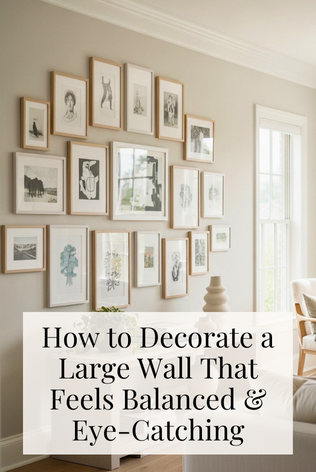
Step 3: Create a Balanced Gallery Wall
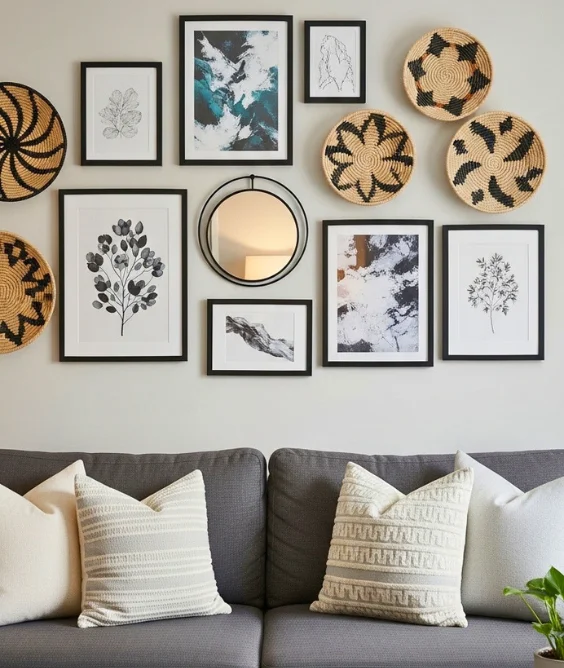
Gallery walls are still one of the most popular ways to decorate a large wall — but the key is structure.
Instead of randomly hanging frames, use a layout formula.
Easy Gallery Layouts:
Symmetrical Grid (Modern & Clean)
Same-size frames arranged evenly.
Organic Cluster (Collected Feel)
Mix sizes and shapes around a central piece.
Vertical Stack (Great for Tall Walls)
Perfect for staircases or high ceilings.
Helpful tips:
- Keep spacing between frames 2–3 inches.
- Mix art, photos, mirrors, and small objects.
- Lay everything on the floor before hanging.
This creates cohesion instead of clutter.
Step 4: Add Depth With Shelves or Picture Ledges
If flat art feels boring, introduce dimension with floating shelves or picture ledges.
They combine storage and display, which is perfect for functional spaces.
Styling Formula for Shelves:
- Lean a large art piece in the back
- Layer a smaller frame in front
- Add a plant
- Stack 2–3 neutral books
- Finish with one sculptural decor item
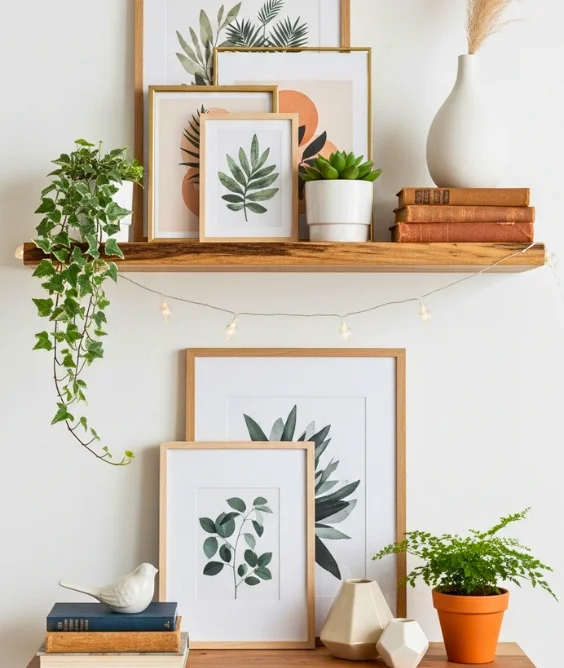
Why shelves work:
- Easy to swap decor seasonally
- Renter-friendly
- Adds visual depth
They make a large wall feel curated and lived-in.
Step 5: Transform the Wall With Texture
Sometimes you don’t need art — you need texture.
Architectural details instantly elevate a large wall and make it feel intentional.
Popular Wall Treatments:
- Wood slat panels
- Shiplap or planked walls
- Wainscoting box trim
- Color blocking with paint
- Peel-and-stick wallpaper
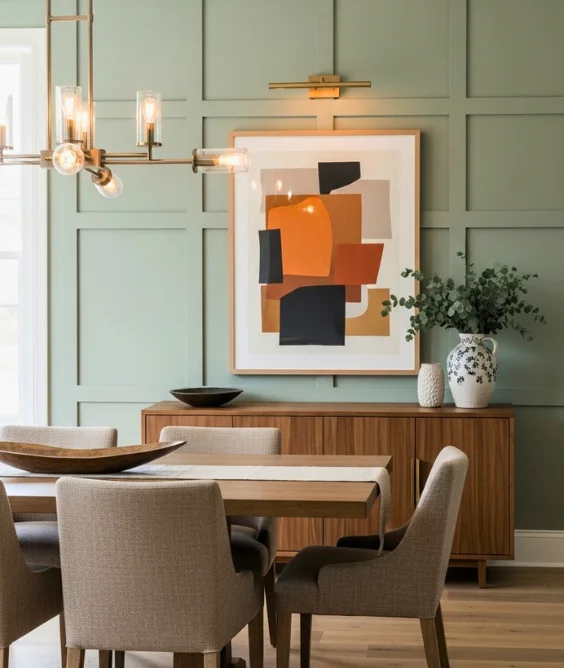
These treatments:
- Add warmth and character
- Break up empty wall space
- Create a built-in focal point
For renters, removable wallpaper or framed fabric panels are excellent low-commitment options.
Step 6: Use Mirrors to Brighten the Space
Large walls can make a room feel dark or heavy.
Mirrors solve that instantly.
They:
- Reflect natural light
- Make rooms feel bigger
- Add elegance without clutter
A large round mirror above a console table works beautifully in entryways and dining rooms. For long walls, try pairing two matching mirrors or combining a mirror with art.
Step 7: Anchor the Wall With Furniture
If art alone feels incomplete, add substantial furniture against the wall first.
Examples:
- Tall bookcases
- Media units
- Sideboards
- Console tables
Then layer artwork above.
This grounds the space and prevents the wall from looking disconnected from the rest of the room.
Step 8: Fix Awkward Proportions With Smart Layouts
Large walls can exaggerate room proportions.
Here’s how to correct that:
- Use horizontal art to visually widen a narrow room.
- Use vertical groupings to emphasize height.
- Add paneling or color blocking to make tall ceilings feel cozier.
Wall decor isn’t just decoration — it’s visual strategy.
Step 9: Keep It Budget-Friendly
Decorating a large wall doesn’t have to feel expensive.
Try:
- DIY abstract art on large canvases
- Thrifted frames painted one color
- Framed fabric or wallpaper panels
- Leaning oversized art instead of hanging
Often, one impactful piece looks more elevated than many small ones.
Final Thoughts
Decorating a large wall is about confidence and scale.
Go bigger than you think.
Choose one clear focal point.
Layer thoughtfully.
And always test your layout before committing.
That big blank wall? It’s not overwhelming anymore — it’s your home’s next statement moment.